Planet and environment
Environmental concerns have evolved from abstract global issues into daily choices that shape our collective future. The relationship between individual actions and planetary health is more visible than ever, yet the sheer volume of information can feel overwhelming. From the energy consumed by streaming a video to the chemicals released when renovating a nursery, modern life presents countless decisions with environmental consequences that aren’t always obvious.
This resource connects the dots between seemingly unrelated aspects of contemporary living—technology use, purchasing patterns, food choices, energy consumption, outdoor spaces, business practices, and household materials. Rather than demanding perfection, understanding these connections empowers you to make informed decisions aligned with your values and circumstances. The goal isn’t to abandon modern conveniences, but to navigate them more thoughtfully.
Why Your Digital Life Has a Physical Impact
The digital world feels intangible, yet it runs on very physical infrastructure with measurable environmental costs. Every email stored, video streamed, and website visited requires electricity—often generated from fossil fuels—to power the vast network of data centers that form the internet’s backbone.
The Infrastructure Behind the Screen
Data centers consume approximately 1-2% of global electricity, a figure that continues rising as digital services expand. These facilities require not just power for computation, but also extensive cooling systems to prevent equipment from overheating. A single large data center can use as much water as a small city for cooling purposes, creating resource competition in areas already facing water scarcity.
Streaming, Storage, and Invisible Consumption
Video streaming accounts for the largest share of internet traffic. The resolution you choose matters: streaming in 4K uses approximately four times the data of standard HD, translating directly into energy consumption. Similarly, accumulating years of digital clutter—forgotten cloud storage files, duplicate photos, unread emails—means servers worldwide continuously power data you’ll never access again.
The Hardware Question
Manufacturing devices creates the majority of their lifetime environmental impact. The production of a single laptop generates approximately 200 kilograms of CO2 and requires precious metals extracted through ecologically destructive mining. Frequent device upgrades, driven by planned obsolescence or the pursuit of minor improvements, multiply this impact far beyond what extended use would create.
Website owners also play a role. Optimizing site efficiency—compressing images, minimizing unnecessary code, choosing green hosting—reduces the energy required for each visitor. These backend decisions cumulatively affect millions of page loads.
The Case for Repairability and Extended Product Life
The transition from a repair culture to a replacement culture represents one of the most significant environmental shifts of recent decades. Items once expected to last years or decades are now designed for obsolescence, creating mountains of electronic waste while consuming resources to manufacture replacements.
Understanding E-Waste Consequences
Electronic waste is the fastest-growing waste stream globally, with discarded devices leaching toxic substances like lead, mercury, and cadmium into soil and groundwater. Yet these same devices contain valuable materials—gold, silver, rare earth elements—that are lost when products cannot be economically disassembled and recovered. The paradox is striking: we mine pristine landscapes for materials that end up in landfills because extraction remains cheaper than recovery.
Barriers to Repair
Modern products increasingly resist repair through several mechanisms. Sealed designs prevent access to components without specialized tools or risking damage. Proprietary parts mean you cannot source replacements from third-party suppliers. Software locks may prevent a device from recognizing replacement parts, even genuine ones. Legal frameworks in many jurisdictions protect these practices, prioritizing manufacturer control over owner autonomy.
Finding repair manuals and parts has become an act of digital archaeology. Independent repair advocates have created community databases and tear-down videos, but this knowledge exists despite, not because of, manufacturer cooperation.
The Value of Modular Design
Modular products—those designed for disassembly and component replacement—extend functional life dramatically. When a laptop’s battery can be swapped in minutes rather than requiring professional service, users actually replace batteries. When a phone’s screen is accessible, cracked glass becomes a repair opportunity rather than a replacement trigger. Regular maintenance, as simple as cleaning dust from vents or updating software, can add years to device lifespan.
Reconnecting With Local and Seasonal Food
Industrial food systems have delivered unprecedented availability, allowing you to eat strawberries in winter and exotic produce year-round. This convenience comes with environmental costs: long-distance transportation, energy-intensive storage, and agricultural practices optimized for shelf life rather than ecological health. Local food systems offer an alternative model centered on seasonal rhythms and regional resilience.
Why Proximity Matters
Local food systems reduce transportation emissions while supporting agricultural diversity. Small-scale farms typically grow multiple crop varieties rather than industrial monocultures, promoting soil health and requiring fewer chemical inputs. The nutritional benefits can be significant too—produce harvested at peak ripeness and consumed within days retains vitamins that degrade during extended storage and transport.
Navigating Farm Shares and Farmers Markets
Community Supported Agriculture (CSA) programs connect consumers directly with farms through seasonal subscriptions. You receive regular shares of whatever is currently harvested, which introduces variety but requires flexibility—you adapt menus to available produce rather than shopping from a predetermined list. Selecting the right farm share involves considering:
- Volume and frequency that matches your household consumption
- Pickup location convenience and schedule compatibility
- Crop diversity and whether unfamiliar vegetables appeal to you
- Cost structure and payment options
Farmers markets occupy a middle ground, offering direct-from-farm access with more choice flexibility. Prices often compare favorably to conventional grocery stores for seasonal items, though specialty or out-of-season products cost more. Building relationships with vendors provides insights into growing practices and upcoming harvests.
Embracing Seasonal Scarcity
Eating seasonally means accepting periods when certain foods aren’t available fresh. This limitation, uncomfortable in a culture expecting constant access, actually enhances appreciation when favored items return. Budget optimization happens naturally—seasonal abundance creates lower prices, while preservation techniques like freezing or fermenting extend availability. The initial adjustment feels restrictive to many, but most people report discovering new favorites they wouldn’t have tried otherwise.
Optimizing Energy Use Through Smart Technology
Household energy consumption represents a significant portion of residential environmental impact. Smart metering and connected devices promise to reduce waste, though they introduce new considerations around data privacy and actual savings versus promised potential.
Understanding Peak Pricing and Grid Dynamics
Electricity grids face variable demand throughout the day. Peak periods—typically mornings and early evenings when people prepare for and return from work—require utilities to activate additional, often less efficient, power plants. Time-of-use pricing reflects this reality by charging more during peak hours, creating financial incentives to shift consumption. Running dishwashers overnight, charging electric vehicles during off-peak hours, or pre-cooling homes before peak pricing begins can reduce both costs and grid strain.
Identifying Energy Vampires
Many devices consume electricity even when apparently off, maintaining standby modes for instant activation. These “energy vampires” individually draw small amounts—perhaps 5-10 watts—but collectively account for approximately 5-10% of residential electricity use. Common culprits include:
- Entertainment systems with standby indicators
- Coffee makers with clocks or programmed brewing
- Phone and laptop chargers left plugged in
- Cable boxes and modems
- Garage door openers
Smart power strips that cut power to peripheral devices when the main unit is off, or simply unplugging rarely-used items, eliminates this passive consumption.
Smart Thermostats and Automation
Programmable thermostats have existed for decades, but smart versions use learning algorithms, occupancy sensors, and remote control to optimize heating and cooling. The claimed 10-15% energy savings materialize most reliably for households with predictable schedules and previously poor thermostat management. Those already conscientious about manual adjustments see smaller benefits.
The data privacy consideration is real: these devices track occupancy patterns, temperature preferences, and daily routines—information potentially valuable to insurers, marketers, or others who might access it. Understanding how manufacturers use and protect this data should inform purchasing decisions.
Creating Wildlife Habitat in Suburban Landscapes
Residential yards collectively occupy more area than all national parks in some countries, representing enormous potential for biodiversity support. Yet traditional landscaping—dominated by lawn monocultures and ornamental non-native plants—provides minimal ecological value. Transforming these spaces into functional habitat requires rethinking aesthetic assumptions.
The Ecological Poverty of Lawns
Mowed grass lawns maintained through irrigation, fertilization, and pesticide application create biological deserts. They support virtually no insect life, which cascades upward: without insects, birds cannot raise young successfully. The resource inputs are substantial—lawn irrigation accounts for nearly one-third of residential water use in some regions, while gas-powered mowers produce disproportionate emissions for the time they operate.
Native Plants and Ecological Function
Native plants evolved alongside local insects, birds, and other wildlife, forming interdependent relationships. A single native oak tree can support over 500 caterpillar species, while common ornamental imports might host five. These caterpillars feed nesting birds, pollinate flowers, and decompose into soil nutrients.
Selecting native plants involves matching species to your specific conditions—soil type, sun exposure, moisture levels—rather than forcing plants to survive in unsuitable locations through constant intervention. Local native plant societies and extension services provide regionally appropriate recommendations. The establishment period requires patience, but mature native landscapes typically need less maintenance than traditional yards.
Creating Biodiversity Corridors
Isolated habitat patches, even high-quality ones, limit wildlife movement and genetic diversity. Coordinating with neighbors to create connected habitat—biodiversity corridors—dramatically increases ecological value. This might mean removing fence sections to allow ground-dwelling animals passage, planting continuous native hedgerows across property lines, or timing yard maintenance to avoid disrupting nesting periods simultaneously.
The question of wildlife feeders versus natural food sources deserves consideration. Feeders concentrate birds unnaturally and can spread disease through crowding. They also create dependency, requiring consistent refilling. Natural food sources—seed-bearing native plants, fruiting shrubs—provide nutrition while supporting the broader ecosystem. Feeders work best as seasonal supplements rather than primary food sources.
Practical Climate Action for Homes and Businesses
Climate action scales from individual choices to business operations, with opportunities at every level. Understanding your actual impact, distinguishing meaningful reduction from symbolic gestures, and evaluating offset quality separates effective action from greenwashing.
Scope Analysis and Honest Accounting
Carbon accounting divides emissions into three scopes. Scope 1 covers direct emissions you control—burning natural gas for heating, gasoline in your vehicle. Scope 2 includes indirect emissions from purchased electricity. Scope 3, the largest and most complex category, encompasses everything in your supply chain—manufactured products, business travel, employee commutes, waste disposal.
Honest scope analysis often reveals uncomfortable truths. A business promoting carbon neutrality might only address Scope 1 and 2 while ignoring the manufacturing emissions embedded in their products. Complete accounting is difficult but necessary for meaningful reduction.
Evaluating Solar Investment
Solar panel economics extend beyond simple payback calculations. Even in less-than-ideal climates with frequent clouds, panels generate meaningful electricity—they function on diffuse light, not just direct sun. A proper shadow analysis, ideally conducted across all seasons, identifies roof sections receiving adequate sun exposure and those permanently shaded by trees or structures.
The lease versus buy decision involves several factors:
- Leasing requires no upfront investment but means someone else claims tax incentives
- Purchasing maximizes long-term savings and property value increase
- Roof condition matters critically—installing panels on a roof needing replacement within 10 years creates expensive complications
- Battery addition, whether immediate or sequenced later, affects system design and electrical infrastructure
For small businesses, the marketing value of visible climate action can justify investments beyond pure financial return. Customers increasingly favor businesses demonstrating environmental commitment, though this goodwill evaporates quickly if claims prove exaggerated.
Understanding Carbon Offsets
Carbon offsets fund projects that theoretically reduce atmospheric carbon elsewhere—planting trees, preventing deforestation, capturing methane from landfills. Quality varies enormously. Credible offsets demonstrate additionality (the project wouldn’t happen without offset funding), permanence (carbon stays sequestered long-term), and verification (independent auditing confirms claimed reductions). Many cheap offsets fail these tests, providing psychological relief without atmospheric benefit.
Rethinking Waste and Material Choices
Waste management has grown increasingly complex as products multiply and materials diversify. Municipal recycling programs, once presented as comprehensive solutions, face significant limitations. Meanwhile, the materials we bring into homes—particularly spaces where vulnerable populations spend time—deserve scrutiny beyond simple functionality.
The Reality of Modern Recycling
Municipal curbside recycling handles a narrower material range than many assume. Contamination from non-recyclable items, food residue, or mixing incompatible materials can render entire batches worthless. Plastic recycling proves particularly problematic—of the seven resin codes, most facilities only process #1 and #2. The remainder goes to landfills despite bearing the recycling symbol.
Textile recycling exists largely outside municipal systems. Fast fashion’s volume overwhelms donation channels, with the majority ending up in landfills. Mail-in recycling programs accept specific materials (electronics, batteries, light bulbs) that municipal systems cannot safely handle, while drop-off locations concentrate certain specialty streams. Optimizing the sorting workflow—designated containers for different streams, regular processing schedules—prevents the common pattern of stockpiling materials that become fire or pest hazards.
Selecting Non-Toxic Materials
Indoor air quality profoundly affects health, particularly for infants spending most hours in nurseries. New furniture, flooring, and building materials release volatile organic compounds (VOCs) through off-gassing—a process peaking immediately after manufacturing but continuing at declining rates for months or years.
Comparing flooring options reveals trade-offs. Solid hardwood and natural linoleum off-gas minimally but cost more and require specific maintenance. Laminate and vinyl flooring off-gas concerning chemicals including formaldehyde and phthalates. Carpet traps allergens and often contains chemical treatments. “Zero-VOC” or “odorless” marketing claims deserve skepticism—some companies reformulate to eliminate detectable smell while retaining problematic chemicals, or only test specific components rather than finished products.
Practical mitigation involves several strategies:
- Complete renovations well before occupancy, allowing maximum off-gassing time
- Maximize ventilation during and after installation—cross-breezes and exhaust fans accelerate dissipation
- Request products manufactured weeks or months prior, allowing warehouse off-gassing
- Prioritize third-party certifications (Greenguard, FloorScore) over manufacturer claims
The intersection of environmental and human health becomes most apparent in material choices. Products harmful during manufacturing or disposal often prove harmful in homes too. Choosing carefully protects both ecological systems and the people inhabiting your spaces.
Understanding environmental impact across these diverse domains reveals patterns: convenience often comes with hidden costs, initial expense frequently saves resources long-term, and systemic change requires both individual action and collective advocacy. Perfect sustainability remains impossible in modern society, but informed choices compound into meaningful difference. The goal isn’t paralysis from impossible standards, but rather gradual alignment between daily decisions and the future you want to help create.

How to Choose Non-Toxic Paints and Materials for a Baby Nursery?
“Zero-VOC” is a marketing term, not a guarantee of safety. A truly non-toxic nursery requires a scientific approach to material selection and environmental control. Volatile Organic Compounds (VOCs) can be added back into “zero-VOC” paint via colorants, a critical loophole…
Read more
Where to Actually Recycle “Non-Recyclable” Items Like Sneakers and Batteries
In summary: Most “non-recyclable” items can be recycled, but require specialized “waste stream logistics” beyond municipal curbside programs. Contamination is the biggest threat to recycling; sorting items like pizza boxes and worn textiles correctly is critical. Paid services like TerraCycle…
Read more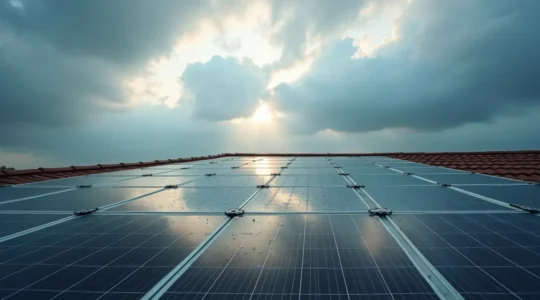
What Is the Payback Period for Solar Panels in Cloudy Climates?
The solar payback period in cloudy climates is less about weather and more about a series of quantifiable engineering and financial decisions made before installation. System performance hinges on total annual energy (insolation), not just sunny days, with modern panels…
Read more
How to Calculate Your Coffee Shop’s Carbon Footprint: A Business Owner’s Pragmatic Guide
Calculating your carbon footprint isn’t an accounting chore; it’s a powerful business strategy to reduce costs and attract better customers. Your biggest environmental impact (and cost-saving opportunity) isn’t your lightbulbs, but your supply chain—specifically milk and coffee beans. Authentic action…
Read more
How to Attract Native Pollinators to a Small Suburban Yard?
In summary: Your yard isn’t an island; it’s a potential link in a vital biodiversity corridor for local wildlife. Replacing even a small part of your lawn with keystone native plants provides exponentially more food for insects and birds. Think…
Read more
How to Lower Your Utility Bill by 15% Using Smart Meter Data?
Your smart meter is a powerful diagnostic tool, and learning to interpret its data can directly cut your energy costs by up to 15%. Identify your home’s unique “energy metabolism” by analyzing time-of-use (TOU) data to shift heavy appliance use…
Read more
How Joining a CSA Farm Share Supports Short Supply Chains?
Joining a CSA builds a resilient, parallel food system that insulates you from the shocks and nutritional losses of the industrial supply chain. Short supply chains mean produce retains significantly more nutrients, directly impacting your health. Pre-payment models create price…
Read more
Why Repairing Electronics Is a Smarter Bet Than Replacing Them in a Circular Economy
The single most impactful environmental choice you can make isn’t recycling your old phone—it’s defiantly refusing to buy a new one. Recycling often destroys more value than it recovers through a process called “functional destruction.” The vast majority of a…
Read more
How to Reduce Your Digital Carbon Footprint Without Going Offline?
Contrary to popular belief, the biggest source of your digital carbon footprint isn’t your email inbox—it’s the physical devices in your hands and the invisible infrastructure they rely on. The manufacturing of a new smartphone generates up to 80% of…
Read more