Buying your first artwork for under $1,000 is not about finding a bargain, but making a smart first investment in an artist’s future.
- Focus on spotting talent at graduate shows, where you can connect with an artist’s career trajectory early on.
- Understand that an original drawing’s value is tied to its provenance and uniqueness, while a print’s value depends on its edition size and publisher prestige.
- Learn to identify and avoid generic, mass-produced “hotel art” that lacks conceptual depth and will never appreciate in value.
Recommendation: Start by building a “micro-portfolio” of a few smaller, promising works from different emerging artists rather than searching for one single, expensive masterpiece.
The idea of buying original art can feel intimidating, like a club with secret rules and a high cost of entry. For many young professionals, the gallery world seems opaque, and the million-dollar auction headlines make collecting feel like a distant dream. You want to live with pieces that have a soul, that tell a story, but you also want to make a smart decision. The common advice, “just buy what you love,” is a good starting point, but it’s incomplete. It overlooks the most thrilling part of collecting: investing in the artist themselves.
This guide demystifies the process by shifting the focus. We’re moving beyond simply acquiring a decorative object. The real key to starting a meaningful and potentially valuable collection on a budget is to learn how to identify an artist’s trajectory. It’s about understanding the signals of future success, the importance of a work’s story (its provenance), and the unique emotional return—the “psychic yield”—that only original art can provide.
Instead of feeling lost in a sea of options, you’ll learn a new framework. We will explore why living with art is a net positive for your well-being, then provide a concrete playbook for spotting future stars before they hit the mainstream. We will break down the practicalities of prints versus originals, how to avoid common purchasing traps, and even how to frame your new piece without breaking the bank. Ultimately, this is about transforming a $1,000 purchase from a simple transaction into the first step of your journey as a collector and patron.
This article provides a structured path to demystify your first art purchase. The following sections will guide you from understanding the intrinsic value of art to making strategic investment decisions.
Summary: Your Guide to Smart Art Collecting on a Budget
- Why Does Living With Original Art Improve Mental Well-being?
- How to Spot Future Stars at Art School Graduate Exhibitions?
- Limited Edition Print vs. Original Drawing: Which Holds Value Better?
- The “Hotel Art” Trap: Identifying Generic Art That Will Never Appreciate
- How to Frame Budget Art Without Spending More Than the Artwork Cost?
- Gold vs. Real Estate: Which Asset Class Best Resists 10-Year Inflation?
- How to Distinguish Real Handicraft From Mass-Produced “Ethnic” Decor?
- How to Protect Your Purchasing Power When Inflation Hits 5% Annually?
Why Does Living With Original Art Improve Mental Well-being?
Before we even talk about investment, let’s start with the most immediate return on your purchase: the daily experience. Living with original art isn’t a passive activity; it’s an active engagement that positively impacts your brain and emotional state. This non-financial return, often called “psychic yield,” is the profound, personal value you get from having a piece in your home that resonates with you. It’s the daily moment of contemplation, the conversation it starts, and the personal story it tells about you.
This isn’t just a feeling; it’s backed by science. Engaging with art stimulates the mind in unique ways. In fact, neuroscience research demonstrates that viewing art increases blood flow and dopamine in the brain’s reward centers—the same areas associated with falling in love. An original work, with its unique textures, brushstrokes, and imperfections, offers a much richer sensory input than a mass-produced poster, creating a deeper and more sustained connection.
Choosing a piece becomes an act of self-expression. It reflects your taste, your curiosity, and your values. Unlike a trending decorative item, an original artwork holds a piece of its creator’s intention and labor. This authenticity creates an environment that feels more personal, curated, and mentally stimulating. It’s an investment in your daily happiness and a powerful way to make your living space a true reflection of your identity.
How to Spot Future Stars at Art School Graduate Exhibitions?
Now for the strategy. The single best place to find incredible, affordable art is at the source: art school graduate exhibitions. This is where the next generation of talent makes its public debut, often before they have gallery representation or market-driven pricing. It’s your chance to acquire work based on raw potential and to start following an artist’s trajectory from day one. You’re not just buying a painting; you’re betting on a person’s creative future.
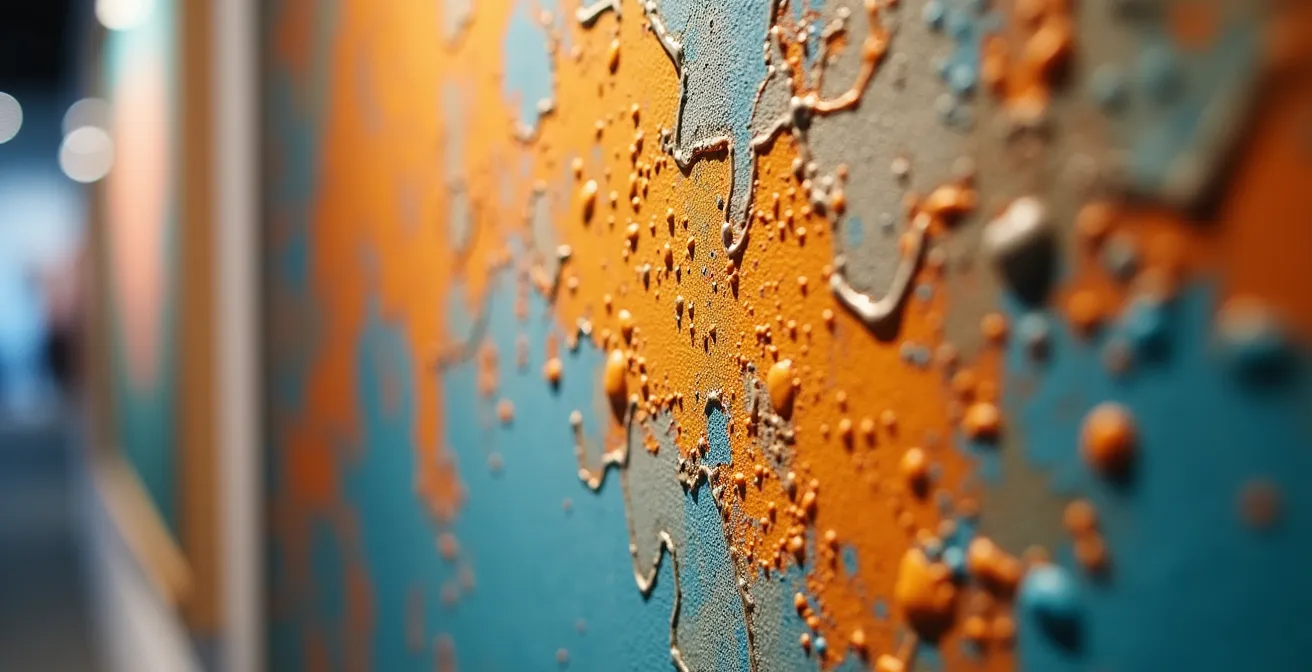
Walking into a graduate show can be overwhelming, so you need a system. Don’t just look for what’s “pretty.” Look for signals of professionalism and vision. Does the artist present a cohesive body of work, or is it a random assortment of styles? Is their pricing consistent and logical? Can they speak clearly and passionately about their concepts and process? These are indicators of a serious artist who is thinking long-term.
Case Study: The Saatchi Art “Rising Stars” Program
Saatchi Art’s annual Rising Stars program identifies recent art school graduates showing exceptional promise. Selections often feature artists who demonstrate a consistent thematic exploration, professional documentation of their work, and early recognition through school awards. This vetting process highlights a key takeaway for new collectors: look for artists who are already gaining institutional validation, however small. Many past participants in programs like this have seen their work appreciate in value by 200-400% within five years, proving that early, informed bets can pay off significantly.
To refine your eye, you need to know what to look for. Beyond the art itself, assess the artist’s professionalism and the early signs of external validation. This is how you separate the promising careers from the fleeting projects.
Your Graduate Exhibition Scouting Checklist
- Review the exhibition catalog for artists who received specific departmental awards or are mentioned in curatorial statements.
- Check if the artist maintains consistent pricing across similar-sized works, which signals a professional approach to the market.
- Engage the artist in conversation: assess whether they can articulate their process and conceptual framework clearly and confidently.
- Subtly observe if faculty members or visiting critics are acquiring pieces—this is a powerful insider validation signal.
- Evaluate if the work shows material ambition and technical skill that goes beyond simple demonstration and pushes the medium.
Limited Edition Print vs. Original Drawing: Which Holds Value Better?
Once you’re exploring, you’ll face a common choice in the sub-$1,000 range: a limited edition print by a more established artist or a unique, original work on paper (like a drawing or watercolor) by an emerging one. From an investment perspective, they operate on different principles. A limited edition print’s value is driven by scarcity (the edition size), the artist’s reputation, and the publisher’s prestige. An original drawing’s value is tied directly to the artist’s trajectory—if their career takes off, the value of that unique piece can grow exponentially.
For a new collector, an original drawing often represents a more direct investment in an artist. You own a one-of-a-kind piece that contains the artist’s hand and thought process. Its value is intrinsically linked to its own story and authenticity. Prints can be a great way to own an image by a “blue-chip” artist you admire, but their market is more like that of luxury goods—defined by brand and edition. As recent market analysis shows that the contemporary art market accounts for almost 50% of all art trading, understanding these nuances is crucial for navigating the fastest-growing segment.
The decision depends on your goals. If you prioritize owning a piece of a famous artist’s legacy with a more predictable (but often lower) upside, a print is a solid choice. If you are excited by the thrill of discovery and the potential for significant appreciation, a unique work from a promising new artist is where the real opportunity lies. This table breaks down the key factors to consider.
| Factor | Limited Edition Print | Original Drawing |
|---|---|---|
| Entry Price | $200-800 typically | $500-1000 minimum |
| Value Retention | Depends on publisher prestige & edition size | Higher if artist gains recognition |
| Liquidity | Easier to sell (known market) | Harder but higher upside |
| Condition Risk | High (paper degradation) | Very high (unique work) |
| Authentication | Publisher’s chop mark crucial | Direct provenance essential |
The “Hotel Art” Trap: Identifying Generic Art That Will Never Appreciate
As you begin your search, you will inevitably encounter “hotel art.” This is the kind of aesthetically pleasing but conceptually empty work you might find in a home decor store or a corporate lobby. It’s designed to be decorative, inoffensive, and easy to match with a sofa. While there’s nothing wrong with decoration, it’s crucial to understand that this type of work is not an investment and will never appreciate in value. It is the “noise” you must learn to filter out to find the “signal” of genuine art.
This generic art often mimics the surface-level trends of contemporary art—abstract brushstrokes, minimalist shapes, popular color palettes—but lacks the most important ingredient: a unique artistic vision. It is often mass-produced, sometimes even digitally printed on canvas to simulate texture, and lacks any real provenance or artist story. It’s created to fill a space, not to provoke thought or emotion. An artist with a genuine practice, even an emerging one, will have a clear conceptual framework behind their work.
Learning to spot the red flags of generic art is a critical skill for a new collector. It trains your eye to look beyond the superficial and to question the “who, why, and how” behind a piece. True art has a point of view. Generic art has a color scheme. By avoiding this trap, you ensure that every dollar you spend is an investment in an authentic creative voice, not just a temporary trend.
Red Flags for Generic Art
- Examine the canvas sides: visible staples often indicate cheap, mass-production framing methods.
- Look closely at the surface for overly perfect digital printing with no visible, authentic brushwork or texture.
- Be critical of pieces that use only trending color palettes (like millennial pink or sage green) without any deeper conceptual justification.
- Question art accompanied by vague artist statements full of buzzwords like “exploring the human condition” but offering no specific vision or process.
- Be wary of works that directly copy the style of a famous artist (a “fake” Rothko, for example) without adding any new dialogue or critical perspective.
How to Frame Budget Art Without Spending More Than the Artwork Cost?
You’ve found your first piece—congratulations! Now, don’t let it sit in a tube in the corner of your room. Proper presentation is not just about aesthetics; it’s about protecting your investment. However, custom framing can sometimes cost as much as the artwork itself, which feels counterintuitive for a sub-$1,000 piece. The secret is to think like a gallery: simple, clean, and archival.
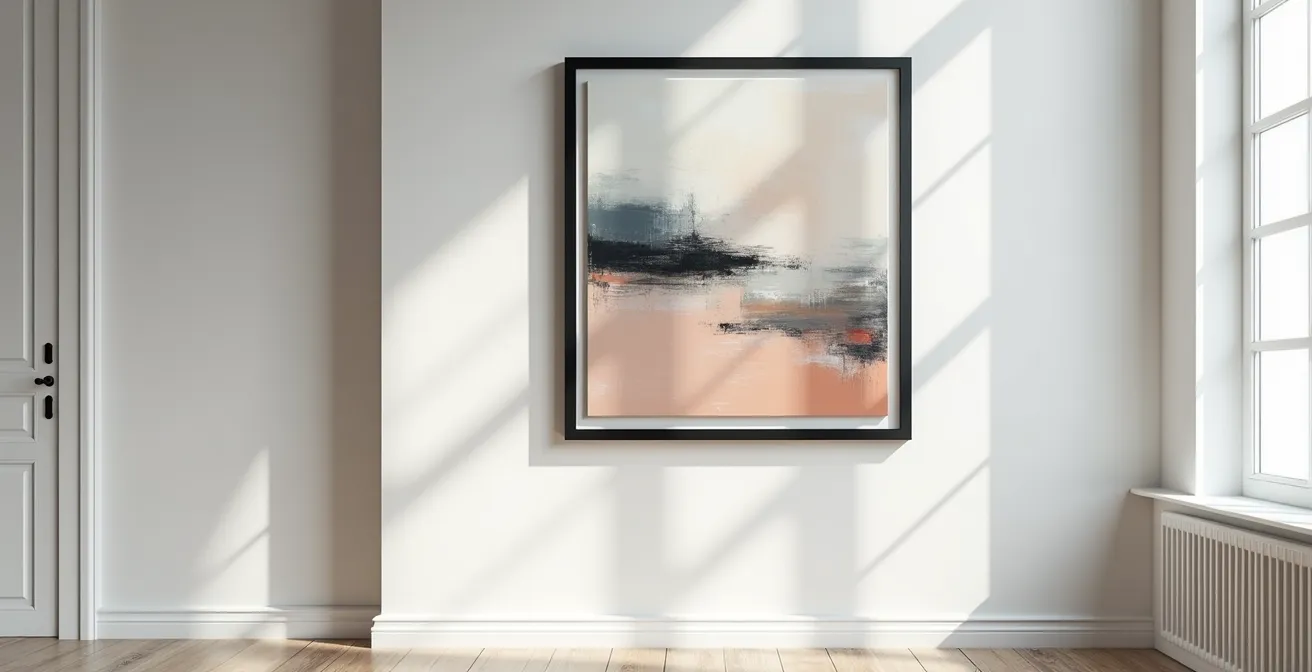
For works on canvas, a “floater frame” is the go-to choice in the contemporary art world. It’s a minimalist wooden frame that leaves a small gap around the canvas, making the artwork appear to “float.” It’s a chic, professional look that doesn’t distract from the art. For works on paper, the priority is archival quality. This means using acid-free mats, backing boards, and UV-protective glass. These materials prevent the paper from yellowing and the colors from fading, preserving the work’s condition and value over time.
You can achieve a high-end look on a budget by buying standard-sized, good-quality frames and having a professional framer cut a custom archival mat for you. This hybrid approach gives you the protection of custom framing at a fraction of the cost. Investing a little in the right presentation not only makes the work look better on your wall but also signals to future buyers that the piece has been cared for, directly impacting its long-term value.
Case Study: Professional Framing on a Budget
Smart collectors know that framing is part of the investment. One emerging collector spent just £50 on archival materials (acid-free mat and backing board) for a simple, off-the-shelf frame to house a £300 drawing. When they decided to sell the piece five years later, it fetched £1,200. The buyer specifically cited the pristine condition and professional presentation as key factors in their decision, demonstrating that a small upfront investment in archival framing can yield a significant return by preserving the artwork’s integrity and value.
Gold vs. Real Estate: Which Asset Class Best Resists 10-Year Inflation?
As a new collector thinking about investment, it’s helpful to contextualize art within the broader landscape of alternative assets. When considering where to place your money to protect it from inflation, people often look to traditional havens like gold or real estate (through REITs, for example). These assets have their merits, but contemporary art offers a unique proposition that they lack: psychic yield and low correlation to the stock market.
Gold is a classic inflation hedge, but it sits in a vault (or an ETF) offering zero daily enjoyment. A real estate investment trust provides dividends, but you don’t get to live in the properties. A piece of art, however, is an asset you can live with and enjoy every single day. This emotional and intellectual return is a form of value that other asset classes simply cannot provide. It diversifies your portfolio not just financially, but experientially.
Furthermore, the art market often moves independently of traditional financial markets. While stocks and bonds may fall during an economic downturn, the value of a specific artist’s work is more closely tied to their individual career progression—exhibitions, awards, and critical recognition. As investment analysis reveals that contemporary art has a low correlation to traditional financial markets, it can serve as a powerful diversification tool, protecting a portion of your wealth from market volatility.
Of course, art is far less liquid than gold or a REIT, and transaction costs are higher. But for a long-term strategy, it offers a combination of potential financial appreciation and daily personal enrichment that is unmatched.
| Asset Type | Liquidity | Transaction Costs | Psychic Yield | Inflation Hedge |
|---|---|---|---|---|
| Gold ETF | High | 0.5-1% | None | Strong |
| Real Estate (REIT) | High | 1-2% | None | Moderate |
| $1000 Artwork | Low | 30-50% | Daily enjoyment | Artist-dependent |
How to Distinguish Real Handicraft From Mass-Produced “Ethnic” Decor?
The concept of authenticity is the bedrock of art collecting. This becomes especially clear when comparing a genuine artwork to a mass-produced decorative object, such as the “ethnic” decor often found in chain stores. While both might draw from cultural aesthetics, only one holds the potential for lasting value. The difference lies in provenance and artistic intent.
A mass-produced item is anonymous. It has no author, no specific story, and its primary purpose is commercial replication. A work of real handicraft or art, by contrast, is the product of a specific maker with a unique vision. Its value is tied to that individual’s skill, creativity, and story. This is why provenance—the documented history of an artwork’s ownership—is so critical. It is the chain of evidence that connects the object back to its creator, confirming its authenticity.
As a collector, training your eye to see the difference is paramount. Look for the subtle imperfections that signal a human hand: slight variations in a pattern, the texture of hand-worked materials, or the artist’s signature. As the experts at Art Fix note, this documented history is what elevates an object from mere decoration to a piece of cultural and financial significance.
Provenance is the ultimate differentiator: the key distinction between a decorative craft object and a piece of art is the documented identity of the maker.
– Art Fix Editorial, A Beginner’s Guide to Collecting Contemporary Art
Requesting a certificate of authenticity and any documentation about the artist’s career is not being difficult; it’s being a smart collector. You are investing in a story, not just an object. This focus on authenticity ensures you are building a collection of lasting worth, not an assemblage of transient decor.
Authenticity Verification Checklist
- Examine the surface for subtle imperfections and hand-made variations in pattern or texture that prove it wasn’t machine-made.
- Verify the maker’s identity through an artist signature, accompanying documentation, or official gallery provenance.
- Check the material quality—authentic pieces often use genuine, sometimes locally-sourced, materials rather than cheap substitutes.
- Look for evidence of traditional techniques being adapted with a personal artistic vision, rather than a generic copy of a style.
- Always request a certificate of authenticity and full provenance documentation from the seller to secure your investment.
Key Takeaways
- An artwork’s true investment potential lies in the artist’s story and career trajectory, not just its decorative appeal.
- Authenticity and provenance are the ultimate drivers of value. A unique work by a lesser-known artist with a clear history is a better investment than a trendy, anonymous piece.
- Building a “micro-portfolio” of several smaller works from different promising artists is an accessible and intelligent strategy for mitigating risk and maximizing potential returns.
How to Protect Your Purchasing Power When Inflation Hits 5% Annually?
Ultimately, investing in art is a long-term strategy to protect and grow your purchasing power. When inflation is high, money sitting in a savings account loses value. While traditional inflation hedges like gold and real estate are options, we’ve seen that contemporary art offers a unique blend of benefits. The key is to approach it not as a single lottery ticket, but as a thoughtfully constructed micro-portfolio.
Instead of searching for one $1,000 piece that you hope will become a masterpiece, consider a more diversified approach. Spreading that same budget across three or four less expensive works by different, promising emerging artists mitigates your risk. Not every artist’s career will take off, but you only need one to succeed for the overall value of your micro-portfolio to outperform inflation and generate a significant return.
The Micro-Collection Portfolio Strategy
A savvy collector in Columbus, Pete Scantland, built an impressive contemporary art collection by adopting this exact strategy. He committed to purchasing three to four pieces annually, each in the $300-$400 range, from different emerging artists. Over a five-year period, this diversified approach paid off. While one artist’s work remained flat in value, another’s appreciated by 300%, and a third gained museum recognition, causing their value to skyrocket. According to a profile on Artsy, this strategy resulted in his overall portfolio appreciation exceeding inflation by an average of 8% annually.
This strategy transforms you from a passive buyer into an active collector. It encourages you to follow multiple artists’ careers, track their exhibitions, and stay engaged with the art world. It’s a more dynamic and, frankly, more exciting way to invest. You’re building a collection with multiple stories and multiple chances for success. By focusing on provenance, spotting talent early, and diversifying your small bets, you can turn a modest budget into a powerful tool for protecting your wealth and building a collection of lasting personal and financial value.
Your journey as a collector starts not with a massive budget, but with a strategic mindset and a curious eye. Start visiting graduate shows, follow artists whose work resonates with you on social media, and begin building your own micro-portfolio. This is how you enter the art world with confidence and build a collection that is both personally meaningful and financially smart.