
The key to managing food inflation isn’t just cutting back; it’s becoming a strategic “pantry economist” for your home.
- Understand the real drivers behind price hikes, like supply chain disruptions in eggs and dairy.
- Master tactical skills like calculating unit prices to avoid the “bulk illusion” and knowing which generic brands are identical to name brands.
Recommendation: Shift your focus from passive saving to active management by learning to predict sales cycles and eliminate the hidden cost of food waste.
Watching your family’s grocery bill climb each week can feel disheartening and overwhelming. You’re likely already doing the things everyone suggests: clipping coupons, looking for sales, and trying to stick to a shopping list. But when the price of essentials like eggs, milk, and bread seems to defy logic, these basic strategies feel like trying to patch a dam with a bandage. The feeling that you’re losing control, despite your best efforts, is a shared frustration for parents everywhere in today’s economic climate.
The common advice often stops at the surface level. It tells you to “buy in bulk” or “switch to generic,” without explaining the pitfalls, like the “bulk illusion” where larger packages cost more per unit, or which generic products are truly worth the switch. This leaves you guessing and potentially wasting money on perceived deals that don’t actually save you anything. The problem with conventional wisdom is that it treats you like a passive consumer, not the savvy, resourceful head of a household that you are.
But what if the real key wasn’t just about spending less, but spending smarter? The most effective way to combat food inflation is to transform from a simple shopper into a strategic pantry economist. This means moving beyond reactive saving and starting to understand the systems that dictate food prices. It’s about learning to anticipate price spikes, decoding the true value of products on the shelf, and turning your kitchen into an efficient, waste-free engine that powers your family.
This guide is designed to equip you with those exact skills. We will deconstruct the reasons behind specific price surges, teach you how to calculate value like a pro, identify the best times to stock up on staples, and implement clever strategies to drastically reduce food waste. By the end, you won’t just be saving money; you’ll be taking back control of your family’s food budget with confidence.
For those who prefer a visual format, the following video offers a comprehensive overview of the broader economic factors contributing to the high food prices families are currently facing.
To help you navigate these advanced strategies, this article is broken down into specific, actionable sections. Below is a summary of the key areas we will cover to help you become the master of your grocery domain.
Summary: Your Playbook for Conquering Grocery Inflation
- Why Have Egg and Dairy Prices Risen Faster Than General Inflation?
- How to Calculate Unit Price Correctly to Avoid “Bulk Illusion” Deals?
- Generic vs. Brand Name: Which Products Are Identical Inside the Package?
- The Credit Trap: Using Cards for Groceries When Interest Rates Are Rising
- When to Stock Up: Predicting Sales Cycles for Pantry Staples
- When to Buy Durable Goods: Anticipating Price Hikes Before They Hit
- Why Does the Average Family Throw Away $1,500 of Food Annually?
- How to Transition to a Zero-Waste Kitchen When You Have Kids?
Why Have Egg and Dairy Prices Risen Faster Than General Inflation?
If you’ve experienced sticker shock in the dairy aisle, you’re not alone. While general inflation affects all goods, some staples like eggs and milk are vulnerable to specific, concentrated price shocks that far outpace the average. This isn’t random; it’s a direct result of supply chain fragility. The most significant recent factor has been the outbreak of Highly Pathogenic Avian Influenza (HPAI), or bird flu. This disease has had a devastating effect on the nation’s egg-laying hen population, leading to massive culls to contain its spread.
The economic impact is staggering. According to a USAFacts analysis, egg prices experienced a 135% increase in just one year, jumping from an average of $2.17 to $5.10 per dozen between early 2022 and 2023. This isn’t just a farmer-level problem. The USDA reported that the costs associated with managing the outbreak exceeded $1.4 billion, including compensation to farmers. These immense costs are inevitably passed down the supply chain, landing squarely on the consumer’s receipt.
More recently, these concerns have expanded to dairy, as the same avian flu has been detected in dairy cattle herds. For a pantry economist, this is a critical price signal. Understanding that these spikes are tied to specific, trackable events (like disease outbreaks or weather patterns affecting feed costs) allows you to move from being a victim of price changes to an informed observer. By monitoring agricultural news and USDA reports, you can better anticipate when a particular commodity is likely to see a price surge and adjust your purchasing strategy accordingly, perhaps by stocking up before the full impact hits retail shelves.
How to Calculate Unit Price Correctly to Avoid “Bulk Illusion” Deals?
One of the most common pieces of advice for saving money is to “buy in bulk.” However, this is often a trap that leads to the “bulk illusion”—the assumption that a bigger package is always a better value. Manufacturers are masters of “shrinkflation,” where they reduce the product’s size or quantity while keeping the price the same. Research from Purdue University shows that while 77% of consumers have noticed shrinkflation, many don’t use the single most effective tool to combat it: the unit price.
The unit price breaks down the cost of an item into a standard unit of measurement, such as per ounce, per pound, or per 100-count. This is the only way to make a true apples-to-apples comparison between different package sizes and brands. A large “family size” box of cereal might seem like a deal, but calculating the price per ounce could reveal that buying two smaller, on-sale boxes is actually cheaper. The store does the math for you; your job is simply to look for that smaller number on the price tag, usually located at the corner.
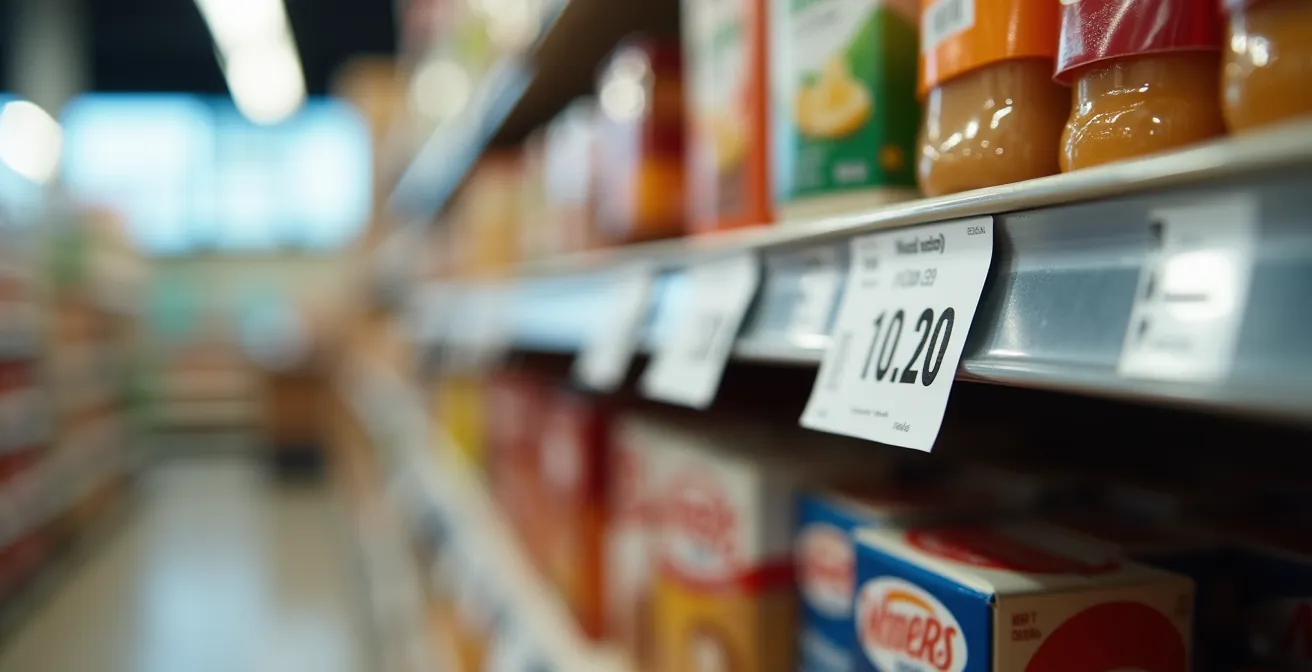
Becoming a disciplined unit price checker is the single most powerful habit you can adopt to ensure you are getting the best value on every purchase. It cuts through misleading packaging and marketing gimmicks. As the data below shows, most shoppers focus on the overall price, which is exactly what retailers count on. To become a true pantry economist, you must train your eye to ignore the big price and focus on the small one.
This comparative table from Purdue University highlights the disconnect between what shoppers think they are checking and what truly reveals value. It underscores why focusing on unit price is a game-changer.
| Information Checked | % Who ‘Often’ or ‘Always’ Check | Impact on Detection |
|---|---|---|
| Overall Price | 82% | Misses size reductions |
| Unit Price | 51% | Key shrinkflation indicator |
| Product Weight | 44% | Essential for true value |
Generic vs. Brand Name: Which Products Are Identical Inside the Package?
“Buy generic” is another common refrain, but it comes with uncertainty. Will it taste the same? Does it work as well? The good news is that for many products, the store brand and the name brand are identical, often made in the same factory. During periods of high inflation, making the switch is one of the quickest ways to slash your grocery bill. A 2024 report from Credit Karma found that 56% of consumers are now buying generic or store-brand items, which can be 20-30% cheaper than their branded counterparts.
The key is knowing which products are safe bets and which require a bit more scrutiny. Certain items are commodities with a single ingredient, making the brand name irrelevant. These are your “safe switches.” For other products, a quick check of the label can reveal everything you need to know. In the case of medications, compare the active ingredients—if they match, you’re getting the same effect. For food and other goods, sometimes you can even find the factory address or plant code printed on the packaging; if they match the name brand, you’ve found a direct equivalent.
For items where taste is subjective, like coffee or pasta sauce, the best approach is to buy the generic version once. If your family doesn’t notice the difference, you’ve unlocked a permanent new source of savings. If they do, you’ve only risked a few dollars. The potential long-term savings are well worth the small initial experiment.
Your Action Plan: Auditing Brand Name vs. Generic Products
- Identify Safe Switches: Start with single-ingredient products where brand has no impact. Inventory your pantry for items like flour, sugar, salt, bleach, and baking soda that can be switched immediately.
- Compare Active Ingredients: For over-the-counter medications, vitamins, and cleaning products, list the active ingredients and their percentages from your current brands. Compare them directly to the store-brand versions.
- Check Factory Codes: For packaged goods, look for a “manufactured for” or “distributed by” address or plant code. Compare the store brand’s code to the name brand’s to spot identical products.
- Conduct Blind Taste Tests: For subjective items like cereal, sauces, or coffee, conduct a blind taste test with your family. This can be a fun way to discover which switches go unnoticed.
- Calculate and Track Savings: For one month, track the price difference for every generic item you buy. Totaling the annual savings can be a powerful motivator to continue the habit.
The Credit Trap: Using Cards for Groceries When Interest Rates Are Rising
When the budget gets tight, it’s tempting to put groceries on a credit card and worry about it later. However, this can create a dangerous debt spiral, especially when interest rates are high. Using credit to cover non-negotiable expenses like food can quickly turn a temporary budget shortfall into a long-term financial burden. The cost of food is already inflated; paying high-interest charges on top of that is like paying for inflation twice.
The data reveals a worrying trend. Research from the Urban Institute shows a 39.8% increase in credit card delinquencies between 2022 and 2024, indicating that more families are struggling to keep up with their payments. Furthermore, the rise of “Buy Now, Pay Later” (BNPL) services for groceries is another red flag. A LendingTree study found that 25% of consumers used BNPL for groceries in 2025, a 78% jump from the previous year. While it may feel like a solution in the moment, it’s simply another form of high-cost credit that masks the underlying budget issue.
The most effective way to break this cycle is to treat your grocery budget like a fixed, cash-based expense. This doesn’t necessarily mean carrying wads of cash, but it does require setting a hard limit. Modern “envelope” strategies can be incredibly effective:
- Use a dedicated debit card: Open a separate, free checking account used only for groceries. Transfer your weekly or monthly budget into it and use that card exclusively. When the money is gone, it’s gone.
- Leverage prepaid cards: Load your grocery budget onto a prepaid debit card at the beginning of the month. This creates a physical barrier to overspending.
- Set up spending alerts: Use your banking app to send you instant notifications for every purchase, so you have a real-time understanding of your remaining budget.
This disciplined approach forces you to make conscious choices within your means and prevents grocery bills from ballooning into unmanageable debt.
When to Stock Up: Predicting Sales Cycles for Pantry Staples
One of the core skills of a pantry economist is moving from buying what you need *this week* to buying what you’ll need *this year* when the price is lowest. Most grocery items, especially non-perishables, follow a predictable annual sales cycle based on holidays and seasons. Learning to anticipate these cycles allows you to stock up strategically, buying a six-month or year’s supply of an item at its rock-bottom price.
For example, baking supplies like flour, sugar, and chocolate chips are always cheapest in the weeks leading up to Easter and the winter holidays. Canned goods see their best prices during autumn “stock-up” events. Grilling items and condiments are deeply discounted around Memorial Day. By aligning your bulk purchases with these sales, you can achieve significant savings that far outweigh any standard weekly discount. This requires two things: a bit of planning and adequate storage space.
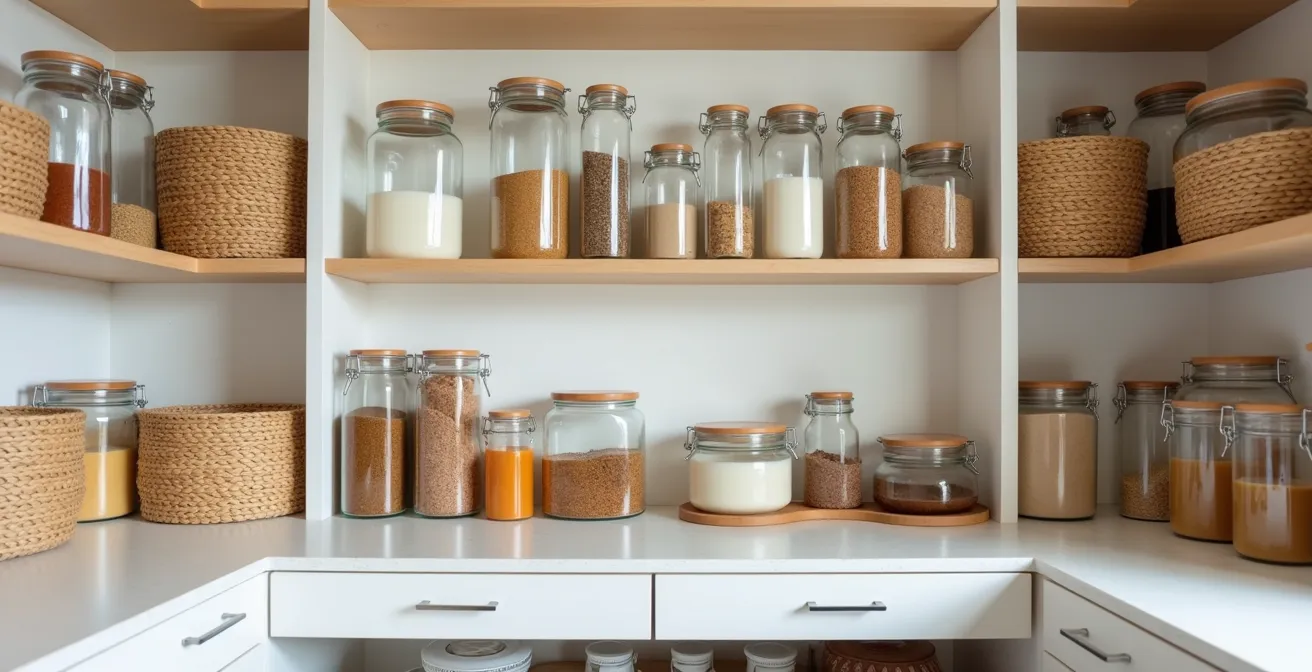
An organized pantry is not just for aesthetics; it’s a financial tool. A well-managed pantry allows you to see what you have at a glance, practice a “first-in, first-out” rotation to prevent spoilage, and confidently buy in bulk when the price is right. You don’t need a massive walk-in space; even a few designated shelves in a closet can serve as your strategic reserve. The key is to treat your pantry like a personal grocery store where you’ve already “paid” for the inventory at the lowest possible price.
This seasonal sales calendar provides a basic roadmap. Use it as a starting point and begin observing the patterns in your local stores to refine your own stock-up strategy.
| Month | Predictable Sales | Stock-Up Strategy |
|---|---|---|
| January | Diet foods, organics | Buy year supply of vitamins |
| March-April | Easter baking goods | Stock flour, sugar for 6 months |
| May | Grilling items, condiments | Buy summer BBQ supplies |
| September | Back-to-school snacks | Stock lunch items |
| October | Canned goods events | Buy year’s supply of canned items |
| November | Baking supplies, turkey | Stock holiday baking needs |
When to Buy Durable Goods: Anticipating Price Hikes Before They Hit
The principles of strategic purchasing extend beyond the grocery aisle. For durable goods—the appliances that are the workhorses of your kitchen, like refrigerators, stoves, and microwaves—timing is everything. Buying a new fridge because your old one suddenly died almost guarantees you’ll pay a premium. A proactive approach, however, can save you hundreds of dollars by aligning your purchase with predictable clearance cycles and economic indicators.
Just as agricultural reports can signal future food price hikes, economic data can signal changes in appliance costs. A key metric to watch is the Producer Price Index (PPI). The PPI measures the costs for manufacturers to produce their goods. According to USDA economic analysis, PPI signals arrive 3-6 months before those price changes are reflected on retail tags. If you see reports of rising steel, plastic, or shipping costs in the PPI, it’s a strong indicator that appliance prices will be going up soon. This gives you a window to purchase a needed item before the next wave of inflation hits.
The other major factor is the retail model year. Most manufacturers release new appliance models in the spring. This creates several key opportunities for savings:
- Spring (March-May): Retailers are clearing out last year’s models to make room for the new inventory. This is an excellent time to find discounts on brand-new, last-generation appliances.
- Fall (September-November): As the next year’s models are being announced, retailers may offer another round of discounts on the current year’s models.
- Holiday Weekends: Major holidays like Memorial Day, Labor Day, and Black Friday often feature specific appliance sales.
By combining an awareness of economic price signals with the predictability of the retail calendar, you can plan for major purchases and avoid the high cost of buying under pressure.
Why Does the Average Family Throw Away $1,500 of Food Annually?
Perhaps the most significant hidden cost in any family’s food budget is not what you buy, but what you throw away. The numbers are staggering: according to USDA estimates, Americans throw away 30% of their food at the consumer level, which for the average family can amount to over $1,500 per year. This isn’t just wasted food; it’s wasted money, time, and resources. In an inflationary environment, curbing food waste is no longer a virtue—it’s a critical financial strategy.
The primary culprits of food waste at home are often good intentions gone awry. We buy fresh produce with plans to cook healthy meals, only for life to get in the way. We get tempted by “Buy One, Get One Free” (BOGO) deals on perishable items, and the second one spoils in the fridge. This creates a “waste multiplier” effect, where a perceived saving actually turns into a total loss. The most expensive ingredient is the one you don’t use.
Resisting these traps requires a shift in mindset from “stocking up” on perishables to buying only what you have a concrete plan to use. A disciplined meal plan is your best defense. Before you go to the store, know exactly what meals you will make and buy only the ingredients for those meals. This simple act prevents “aspirational” purchases of vegetables that will later wilt in the crisper drawer.
Case Study: The BOGO Illusion
A shopper found a two-pound bag of frozen salmon on a “buy one, get one half-off” deal for $13 per bag. The deal was tempting, but they recognized they only had a plan for one bag. By resisting the BOGO offer and purchasing only the single bag they needed, along with simple sides like broccoli and rice, they were able to create multiple healthy family meals for under $20. Had they bought the second bag “just for the deal,” it might have sat in the freezer for months, risking freezer burn and ultimately becoming waste, turning a perceived $6.50 saving into a $13 loss.
Key Takeaways
- Becoming a “pantry economist” means shifting from reactive saving to proactive, strategic management of your food budget.
- The most powerful tools against inflation are often hidden in plain sight: unit pricing, sales cycle prediction, and a zero-waste mindset.
- Eliminating food waste is not just an environmental goal; it’s a direct financial strategy that can save the average family over $1,500 annually.
How to Transition to a Zero-Waste Kitchen When You Have Kids?
The idea of a “zero-waste kitchen” can sound intimidating, especially with kids who can be picky eaters. However, the goal isn’t immediate perfection; it’s about building a system that makes using what you have easier and more fun than throwing it away. The key to success with a family is to turn waste reduction into a game rather than a chore. By getting your children involved, you not only teach them valuable life skills but also create allies in your mission to save money.
Start with simple, visible systems. Create an “Eat Me First” box or shelf in the refrigerator. Anything that is approaching its expiration date or is a leftover from a previous meal goes in this box. It becomes the first place everyone looks for a snack. This simple visual cue can dramatically reduce the number of forgotten containers that turn into science experiments. From there, you can introduce creative challenges, like a weekly “Leftover Makeover” night where the family votes on the most creative dish made from leftovers.
Another powerful strategy is to find value in what you would normally discard. Many food scraps can be given a second life. Broccoli stems can be peeled and roasted to become “broccoli fries,” carrot tops can be blended into a nutritious pesto, and the ends of green onions can be placed in a glass of water on the windowsill to regrow indefinitely. One family that implemented these “use-it-all” strategies reported saving an additional $30 to $50 per month, turning their weekly food waste from over five pounds to less than one. These small, creative acts add up to significant savings over a year.
By gamifying the process and celebrating small wins, you can transform your kitchen’s culture. You’re not just cutting waste; you’re building a more resourceful and resilient family, all while keeping more of your hard-earned money in your pocket.
Start today by implementing one or two of these strategies. By shifting your perspective and adopting the mindset of a pantry economist, you can effectively shield your family from the pressures of food inflation and build a more secure financial future.