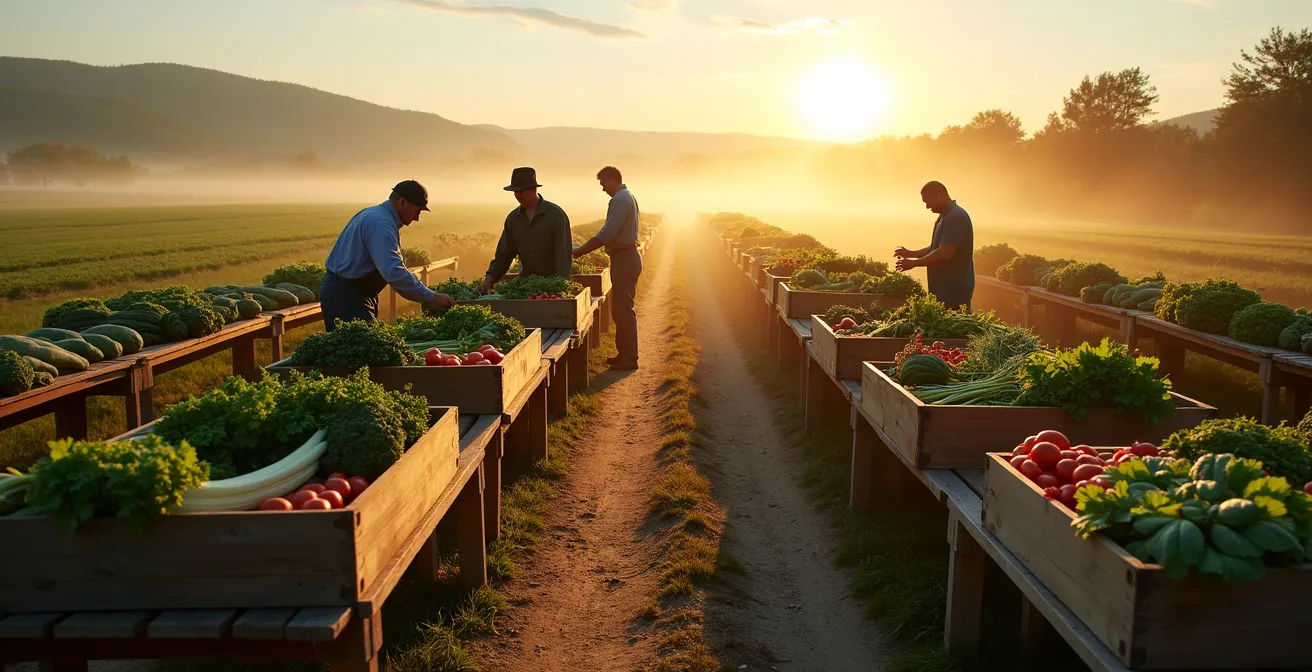
Joining a CSA builds a resilient, parallel food system that insulates you from the shocks and nutritional losses of the industrial supply chain.
- Short supply chains mean produce retains significantly more nutrients, directly impacting your health.
- Pre-payment models create price stability for both you and the farmer, buffering against market inflation.
Recommendation: Shift a portion of your food budget to a local CSA to not only get better quality food but to actively invest in your community’s food security.
For many urban families, the grocery store is a paradox of abundance and anxiety. Shelves are packed, yet news of supply chain disruptions, price hikes, and questions about nutritional value create a constant hum of uncertainty. We’re told to “eat fresh” and “buy organic,” but these labels often hide a long, anonymous journey from a distant mega-farm to our kitchen table. This journey is where the quality we seek is often lost, a casualty of time, transport, and a system built for shelf life, not for human life.
But what if there was a way to step outside this fragile system? What if, instead of just being a consumer at the end of a long chain, you could become a partner at its very beginning? This is the fundamental shift offered by Community Supported Agriculture (CSA). It’s not simply a vegetable subscription box; it’s a conscious decision to shorten the distance between the soil and your plate. It’s a model rooted in a direct relationship with a farmer, where you invest in their harvest and, in return, receive a share of the freshest, most nutrient-dense food your local landscape can produce. This article explores how this simple act of joining a CSA is a powerful move toward building nutritional, economic, and biological resilience for your family and community.
For those who prefer a visual format, the following video offers insights into the operational strategies of CSA farms, complementing the resilience principles discussed in this guide.
To fully grasp how this model works, we will explore the core pillars of the CSA system. From the science of nutrient preservation to the economics of price stability, this guide breaks down the tangible benefits of reconnecting with your local food source.
Summary: The Resilient Kitchen: Why a CSA is Your Best Investment
- Why Does Lettuce Lose 50% of Its Nutrients After 3 Days of Transport?
- How to Choose a CSA Box That Matches Your Cooking Habits?
- Supermarket Organic vs. Local Conventional: Which Is Actually Greener?
- The “February Gap”: What Happens When Local Farms Have Nothing to Sell?
- How to Make Local Meat Affordable by Buying a Quarter Cow?
- Why Does Chronic Inflammation Start in the Gut for 70% of People?
- Why Have Egg and Dairy Prices Risen Faster Than General Inflation?
- How Preventive Nutrition Can Lower Your Risk of Chronic Disease After 40?
Why Does Lettuce Lose 50% of Its Nutrients After 3 Days of Transport?
The term “fresh” in a supermarket is relative. That head of lettuce, crisp as it may seem, has been on a long journey. From the moment it’s harvested, a clock starts ticking on its nutritional content. This isn’t just a vague notion; it’s a biological process. Vitamins, especially sensitive ones like Vitamin C, begin to degrade due to exposure to heat, light, and oxygen. The extended time required for produce to be picked, packed, shipped to a distribution center, and finally stocked on a grocery shelf can span several days, if not weeks. This is the hidden cost of a long supply chain.
The core issue is supply chain velocity. A typical CSA model drastically accelerates this process. Produce is often harvested the morning of or the day before you receive it. This radical reduction in “farm-to-fork” time means that the food you eat is at its absolute peak of nutritional value. A 2024 study highlights that the difference can even start with the seed, finding wild and traditional lettuce varieties common on diverse farms contain significantly more nutrients from the outset. For instance, the study confirmed that wild and traditional lettuce varieties contain 21% and 8% more Vitamin C respectively than their commercial counterparts. This concept of nutritional resilience is central to the CSA promise: you’re not just getting vegetables, you’re getting the vitamins and minerals that are supposed to be in them.
- Harvest Timing: CSA farmers pick produce at its peak ripeness, when nutrient content is highest, not weeks before to account for travel time.
- Temperature & Light Control: The direct path from farm to you minimizes exposure to fluctuating temperatures and UV light, which rapidly degrade vitamins.
- Reduced Handling: Every transfer point in the industrial chain causes bruising and damage, accelerating decay. A CSA share is handled minimally, preserving its integrity.
By closing the gap between harvest and consumption, a CSA directly combats this nutritional decline, ensuring your family gets the full health benefits of the food you purchase.
How to Choose a CSA Box That Matches Your Cooking Habits?
Embracing a CSA is exciting, but it requires a mental shift from “shopping for a recipe” to “creating a recipe from what you have.” The most common reason for dissatisfaction is a mismatch between the share size and a family’s lifestyle, leading to food waste. In fact, industry analysis shows that CSAs can experience a 25-70% member turnover rate annually, often due to members feeling overwhelmed by the volume or type of produce.
To avoid this, an honest assessment of your household’s eating and cooking habits is the first step. Are you a family of adventurous eaters, or do you stick to a few favorites? How many nights a week do you realistically cook from scratch? Answering these questions will help you select the right farm and the right share size, turning your CSA experience into a joyful discovery rather than a stressful obligation. The goal is to find a partnership that nourishes you without overwhelming your fridge.
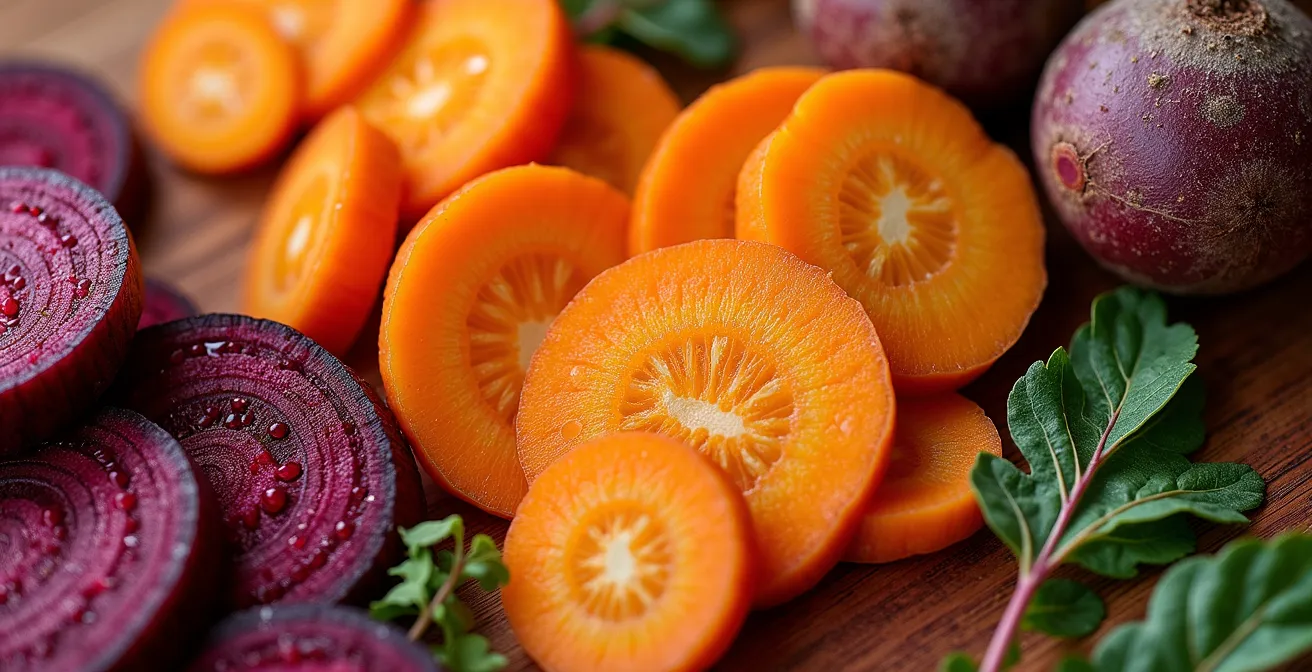
Many farms offer different share sizes and even customizable options. Don’t hesitate to talk to the farmer. They want you to have a successful experience and can be your best guide in choosing a share that fits your life. Below is a typical guide to help you visualize what different share sizes might look like.
This comparative table offers a general framework for understanding what to expect from different CSA share options.
| Share Size | Ideal For | Weekly Volume | Variety Range |
|---|---|---|---|
| Small/Half Share | 1-2 people | 5-7 lbs | 5-8 items |
| Standard Share | 3-4 people | 10-15 lbs | 8-12 items |
| Large/Family Share | 5+ people | 18-25 lbs | 12-15 items |
Choosing thoughtfully transforms the CSA from a box of vegetables into an integrated part of your weekly meal planning, fostering creativity and reducing waste.
Supermarket Organic vs. Local Conventional: Which Is Actually Greener?
The “organic” label in a supermarket can be misleading. While it certifies a certain set of practices, it doesn’t tell you anything about the journey. An organic apple from thousands of miles away has a significant carbon footprint from transportation and cold storage. Conversely, a “conventional” apple from a local farm you can visit might be grown with minimal, targeted interventions but can’t be labeled organic. This creates a false dichotomy. The “greener” choice is often more nuanced than a simple sticker.
The real advantage of a CSA is transparency. You have a direct line of communication with the person growing your food. You can ask them about their soil health practices, their pest management strategies, and their philosophy on sustainability. This relationship replaces the need for an anonymous, bureaucratic certification. It shifts the focus from a rigid set of rules to a holistic understanding of the farm as an ecosystem. The direct-to-consumer model is a significant economic force, with USDA data from 2020 showing $225 million in sales from thousands of farms, proving its viability.
As farmer and author Elizabeth Henderson, a pioneer of the CSA movement, wisely points out in her book “Sharing the Harvest”:
The greener choice is the one that offers transparency and accountability. A local CSA allows for direct conversation with the farmer about their practices.
– Elizabeth Henderson, Sharing the Harvest: A Guide to Community Supported Agriculture
Ultimately, supporting a local farm—whether certified organic or not—keeps resources, money, and food within your community, which is arguably a more impactful definition of “green.”
The “February Gap”: What Happens When Local Farms Have Nothing to Sell?
One of the realities of seasonal eating in many climates is the “winter gap”—that period in late winter and early spring when storage crops are dwindling and new growth hasn’t yet begun. This can be a challenge for both farmers and CSA members. However, this perceived weakness is also a driver of incredible innovation within the local food movement. Resilient farms are not idle during this time; they are actively working to bridge this gap and create a more continuous, year-round food supply.
Modern CSAs are increasingly becoming four-season operations. They employ a range of techniques, from simple row covers to sophisticated high tunnels and greenhouses, to extend the growing season. These structures allow them to cultivate cold-hardy greens like spinach and kale, harvest root vegetables throughout the winter, and get a head start on warm-weather crops like tomatoes. This ingenuity turns the “February Gap” from an empty period into a time for different kinds of abundance.
Case Study: Four-Season CSA Innovation
Innovative farms are proving that the winter gap is a solvable problem. As documented by NC State Extension, many CSAs are now using high tunnels—unheated, plastic-covered structures—to create microclimates. This allows for the year-round production of cold-hardy greens and root vegetables, and even enables them to start early tomatoes. By protecting crops from the harshest elements, these farms effectively close the traditional winter supply gap and provide fresh, local produce to their members when supermarkets are relying solely on long-distance imports.
For members, bridging the gap also involves embracing traditional food preservation skills, turning the peak harvest of summer and fall into a resource for winter. Many CSAs now offer workshops or share resources on canning, fermenting, and drying, empowering their members to build their own resilient pantries.
Action Plan: Bridging the Winter Food Gap
- Partner with other local producers: Farms can supplement winter boxes with local dairy, meat, honey, and preserved goods from other artisans.
- Offer preservation workshops: Teach members how to can, freeze, or ferment peak-harvest produce during the summer and fall.
- Create ‘winter bridge boxes’: Curate shares focused on stored roots (carrots, potatoes), winter squash, and value-added items like sauerkraut or dried herbs.
- Implement season extension techniques: Invest in row covers, cold frames, or high tunnels to continue growing cold-hardy crops.
- Develop value-added products: Turn excess produce into shelf-stable goods like sauces, jams, or fermented vegetables to sell during leaner months.
This collaborative approach ensures a more consistent supply of local food, strengthening the entire food system against seasonal lulls.
How to Make Local Meat Affordable by Buying a Quarter Cow?
The principles of Community Supported Agriculture extend beyond vegetables. Many local farms offer meat shares, applying the same model of direct-to-consumer sales for beef, pork, and chicken. For many families, the perceived high cost of pasture-raised, local meat is a barrier. However, buying in bulk—such as purchasing a quarter or half cow—radically changes the economic equation. While the upfront cost is higher, the per-pound price is often significantly lower than buying individual cuts at a supermarket or even a farmers’ market.
This approach provides incredible value, giving you a full range of cuts from ground beef and stew meat to premium steaks and roasts, all for one blended, affordable price. It’s a perfect example of economic resilience: by investing in bulk, you lock in a price and insulate yourself from the market volatility of retail meat counters. The main considerations are the upfront cost and having adequate freezer space (a quarter cow typically requires 7-9 cubic feet).
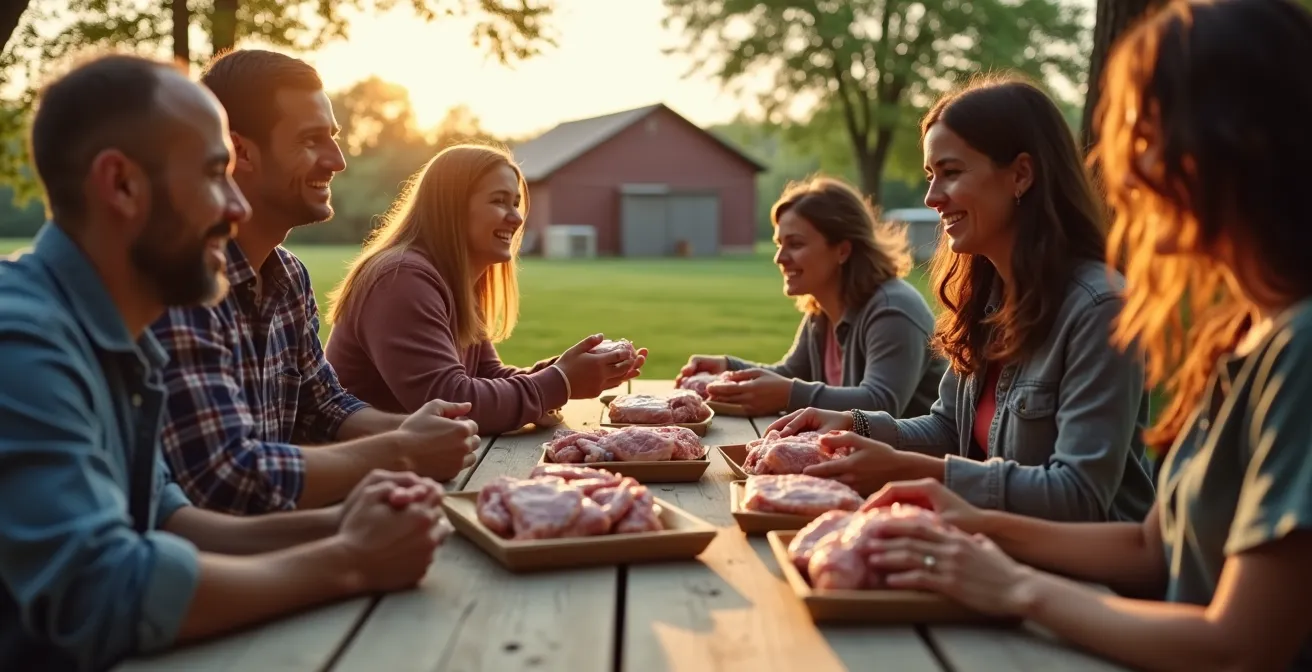
For those with limited space or a smaller budget, “cow pooling” with friends or neighbors is a fantastic option, allowing you to split a share and reap the benefits of bulk pricing without the large commitment. This collaborative consumption is community-building in its purest form.
This cost analysis demonstrates how bulk purchasing through a farm share makes high-quality local meat a financially accessible option.
| Purchase Type | Cost per lb | Variety | Storage Needed |
|---|---|---|---|
| Supermarket cuts | $8-25/lb | Limited popular cuts | Home freezer |
| Quarter cow share | $4-8/lb | Full variety including premium cuts | 7-9 cubic feet freezer |
| Cow pool (split quarter) | $5-9/lb | Shared variety | 3-4 cubic feet |
By shifting your perspective from single-meal purchases to a long-term pantry investment, you can access superior quality meat at a more affordable price, all while supporting regenerative farming practices.
Why Does Chronic Inflammation Start in the Gut for 70% of People?
The conversation around health is increasingly focused on chronic inflammation, the underlying driver of many modern diseases. A significant portion of our immune system resides in our gut, and the health of this internal ecosystem—the gut microbiome—is profoundly influenced by our diet. The industrial food system can be hostile to gut health. Produce grown in depleted soil, treated with systemic pesticides, and consumed days after harvest lacks the microbial diversity and nutrient density our bodies need.
This is where CSAs offer a powerful, restorative benefit, building what can be called biological sovereignty. Food from a regenerative, local farm acts as a delivery system for beneficial microbes. Research on regenerative farms shows that diverse soil microbial communities transfer beneficial bacteria to the surfaces of fresh produce. When consumed within days of harvest, these microbes can help colonize and diversify our own gut microbiome, which is a cornerstone of a healthy immune response. It’s a direct transfer of health from the soil to your gut.
Furthermore, by choosing a CSA that prioritizes low-intervention or organic practices, you dramatically reduce your exposure to pesticide residues that can disrupt gut flora. Studies consistently show that opting for organic produce can lead to a 95% reduction in pesticide residues in the body. This isn’t just about avoiding toxins; it’s about creating a nurturing environment for the trillions of allies in your digestive system to thrive.
Eating from a CSA is a proactive step in cultivating a robust internal ecosystem, directly fighting inflammation at its source.
Why Have Egg and Dairy Prices Risen Faster Than General Inflation?
In recent years, consumers have felt the sting of “egg-flation” and sharp rises in dairy prices. These spikes are a clear symptom of a brittle, highly centralized food system. A single disruption—like an outbreak of avian flu in a mega-facility or a spike in fuel costs for cross-country transport—can send prices soaring at the supermarket. This volatility is a feature, not a bug, of a long and complex supply chain where consumers are at the mercy of distant market forces.
CSAs, on the other hand, operate on a model of economic insulation. By paying for your share at the beginning of the season, you enter into a direct partnership with the farmer. This pre-payment provides the farmer with crucial capital when they need it most (for seeds, supplies, and labor) and, in return, it provides you with a locked-in price for the entire season. You are effectively buffered from the price shocks of the retail market. While the average annual CSA shares range from $400 to $700, this cost remains stable regardless of what happens in the wider economy.
This shared-risk model is the bedrock of the CSA’s economic stability, a point clearly articulated by agricultural experts.
By paying at the beginning of the season, CSA members share in the risk of production and relieve the farmer of much of the time needed for marketing.
– NC State Extension, Community Supported Agriculture Resource Guide
This isn’t just about getting a “good deal”; it’s about participating in a more stable, predictable, and resilient local economy where value is exchanged directly between the producer and the community.
Key Takeaways
- Nutritional Resilience: CSA produce, delivered within hours of harvest, retains significantly more vitamins and minerals than supermarket food that spends days in transit.
- Economic Insulation: The CSA pre-payment model locks in food prices for the season, protecting you and the farmer from the inflationary shocks of the global market.
- Biological Sovereignty: Eating fresh food from healthy, local soil directly transfers beneficial microbes to your gut, which is foundational for reducing chronic inflammation and building a strong immune system.
How Preventive Nutrition Can Lower Your Risk of Chronic Disease After 40?
As we move past 40, the focus of health often shifts from reactive treatment to proactive prevention. Nutrition becomes one of our most powerful tools in this effort. A diet rich in phytonutrients, antioxidants, and vitamins is scientifically linked to a lower risk of chronic diseases like heart disease, diabetes, and certain cancers. The challenge is that the potency of these protective compounds is directly linked to the freshness and quality of our food.
This is where a CSA becomes a cornerstone of a preventive health strategy. The nutritional superiority of just-picked produce is not marginal; it is significant. As research has shown, heirloom and traditional varieties often found on CSA farms can have dramatically higher levels of vital compounds like Vitamin C. By consistently consuming produce at its peak nutritional state, you are providing your body with a steady, powerful stream of the very tools it needs to fight cellular damage and reduce inflammation. It is the ultimate form of preventive medicine, delivered in a weekly box.
Embracing a CSA-based diet for long-term health involves a few simple but powerful habits:
- Eat Quickly: Make it a goal to consume the most perishable greens and vegetables within 24-48 hours of receiving your share to maximize nutrient intake.
- Embrace Variety: The diverse array of vegetables in a CSA ensures you get a wide spectrum of phytonutrients, as different colors correspond to different health-protective compounds.
- Incorporate Ferments: Fermenting vegetables from your share, like cabbage for sauerkraut or carrots for pickles, adds a powerful dose of probiotics for gut health.
By building your diet around the vibrant, living foods from a local farm, you are making a profound and direct investment in your long-term health and well-being. Your next step is to find a farm in your area and start a conversation. Explore local CSA directories online or visit a farmers’ market to connect with growers and discover the share that is right for you.