Culture and leisure
Culture and leisure have evolved far beyond simple entertainment or downtime. They now represent critical domains where personal growth, identity preservation, and conscious choices intersect. Whether you’re navigating a professional relocation abroad, building your first art collection, seeking authentic culinary experiences, or documenting your family’s history, these pursuits demand thoughtful approaches rooted in both knowledge and self-awareness.
The modern landscape of cultural and leisure activities presents unprecedented opportunities alongside genuine challenges. From decoding unspoken social norms in unfamiliar environments to distinguishing performative sustainability from genuine conservation efforts, today’s engaged individuals require practical frameworks for making informed decisions. This comprehensive resource addresses five interconnected dimensions of cultural and leisure engagement, offering actionable insights for those who view these domains not as passive consumption, but as active participation in shaping meaningful lives.
Cultural Adaptation and Cross-Border Living
International mobility has become increasingly common, yet the psychological and social complexities of cultural adaptation remain deeply underestimated. The transition between cultures operates less like flipping a switch and more like gradually adjusting your eyes to different lighting—a process with distinct stages that cannot be rushed.
Understanding the Adaptation Timeline
Cultural integration follows a predictable psychological trajectory that researchers have identified across diverse populations. The initial honeymoon phase, characterized by excitement and curiosity, typically gives way to frustration as the novelty fades and daily challenges accumulate. This middle period—where miscommunication peaks and homesickness intensifies—proves critical. Those who recognize it as a normal developmental stage rather than personal failure navigate it more successfully.
The timeline varies considerably based on cultural distance, language proficiency, and social support networks. Someone moving between culturally similar contexts might achieve functional adaptation within months, while those bridging significantly different cultural frameworks may require years to reach genuine comfort.
Decoding Unspoken Social Norms
The most challenging aspects of cultural adaptation often involve implicit rules that locals absorb unconsciously but newcomers must learn deliberately. Consider business etiquette: what constitutes appropriate directness in feedback varies dramatically across contexts. A communication style perceived as refreshingly honest in one environment might register as shockingly rude in another.
Effective methodology for decoding these invisible protocols involves systematic observation before action. Watch how people handle common situations—greetings, disagreements, invitations—across multiple contexts before establishing your own patterns. Pay particular attention to what remains unsaid, as silence often carries as much meaning as words.
The Immersion Versus Expatriate Community Choice
One of the most consequential decisions for relocated professionals involves social integration strategy. Complete immersion in the local community accelerates language acquisition and cultural understanding but can prove emotionally exhausting. Expatriate communities offer immediate support and familiar social codes but may create insular bubbles that impede deeper integration.
The most resilient approach typically involves strategic hybridity: maintaining connections with both worlds while being intentional about the balance. This might mean dedicating weekday social time to local relationships while reserving weekends for expatriate community connections, or vice versa depending on your specific needs and circumstances.
Building an Art Collection With Purpose
Art collecting, once perceived as the exclusive domain of the wealthy, has become increasingly accessible. Yet accessibility alone doesn’t guarantee meaningful engagement. The difference between acquiring decorative objects and building a purposeful collection lies in intentionality, education, and understanding your own motivations.
The Psychology Behind Collecting
Understanding why you’re drawn to collecting transforms the activity from consumption to curation. Some collectors seek aesthetic pleasure, others pursue investment returns, while many combine multiple motivations. The psychological satisfaction of collecting often stems from the narrative you construct around your pieces—the story of discovery, the connection to the artist’s vision, or the memories associated with acquisition.
Research suggests that collections rooted in genuine personal resonance rather than external validation provide more sustained satisfaction. This means spending time clarifying what genuinely moves you before making purchasing decisions based on trends or perceived prestige.
Navigating the Emerging Art Market
Investing in emerging artists with limited budgets requires a fundamentally different approach than acquiring established works. Graduate shows, artist-run spaces, and community galleries offer access points where exceptional work can be acquired at accessible price points. The key lies in developing your eye through sustained exposure and learning to distinguish technical competence from conceptual depth.
When evaluating emerging work, consider:
- Conceptual coherence across multiple pieces
- Technical skill appropriate to the artist’s intentions
- Engagement with contemporary conversations in the field
- The artist’s professional trajectory and institutional recognition
Original Works Versus Prints: Making Informed Choices
The prints versus originals debate often becomes unnecessarily polarized. Limited edition prints from significant artists can hold substantial value, while mediocre original works may never appreciate. Quality and significance matter more than medium. A signed, limited edition print from an important artist often represents a wiser investment than an unremarkable original from an unknown creator.
The risk of acquiring what collectors call “decorative fluff”—work that matches your sofa but lacks artistic merit—diminishes when you prioritize learning over buying. Attend exhibitions, read artist statements, and engage with the broader artistic conversation before committing significant resources.
Authentic Culinary Experiences
Food tourism has exploded in popularity, yet truly authentic dining experiences remain elusive for many travelers. The challenge lies not in finding restaurants but in distinguishing genuine local food culture from sanitized tourist approximations designed to meet preconceived expectations rather than deliver actual tradition.
Identifying Authenticity Beyond Marketing
Authentic dining experiences rarely announce themselves with explicit claims of authenticity—in fact, such claims often signal the opposite. Instead, look for contextual indicators: a local clientele speaking the native language, menus without multilingual translations or photos, and pricing consistent with local economic realities rather than tourist budgets.
The visual cues of food quality extend beyond presentation aesthetics. In traditional contexts, authenticity often manifests as apparent simplicity—dishes that showcase ingredient quality rather than elaborate plating. Street food vendors with long queues of locals waiting patiently provide more reliable quality signals than empty restaurants with aggressive solicitation tactics.
Navigating the Street Food Versus Fine Dining Spectrum
The street food versus fine dining comparison represents a false binary. Both can deliver exceptional or disappointing experiences depending on execution and context. Street food excels at preserving traditional preparation methods and offering direct connection to everyday food culture, while fine dining environments enable creative interpretation and refinement of culinary traditions.
Your choice should align with your specific objectives. Seeking to understand daily food culture and traditional flavors? Street food and casual local establishments provide superior access. Interested in contemporary culinary innovation rooted in traditional techniques? High-end restaurants offer that experience, albeit at considerable cost.
Overcoming Hygiene Bias
Many travelers struggle with what researchers term hygiene bias—using familiar visual hygiene markers to assess food safety in contexts where different standards apply. A spotless modern kitchen can harbor dangerous practices, while a modest street stall operating according to generations of food safety wisdom may be perfectly safe.
Effective risk assessment focuses on operational indicators: food temperature, turnover speed, cooking thoroughness, and vendor reputation within the local community. High customer volume typically signals both quality and safety, as rapid turnover ensures freshness and community trust validates consistent standards.
Preserving Family Heritage
Family traditions and histories exist in a precarious state—simultaneously precious and fragile. The digital age offers unprecedented tools for preservation while introducing new challenges around format obsolescence and the loss of tacit knowledge that exists only in living memory.
Capturing Oral Histories Effectively
The most valuable family heritage often resides not in physical objects but in stories, recipes, and perspectives held by older generations. These intangible elements possess extreme fragility—they disappear permanently when the knowledge holders pass away. Systematic documentation requires overcoming both logistical and psychological barriers.
Effective interview techniques balance structure with flexibility. Prepare specific questions about meaningful periods, decisions, and traditions, but remain open to tangents and unexpected narratives. Often the most revealing stories emerge from seemingly minor details that trigger deeper memories.
Choosing Recording Formats for Longevity
The paradox of digital preservation lies in its simultaneous permanence and vulnerability. Digital files don’t degrade like physical media, yet format obsolescence can render them inaccessible within decades. Consider the challenge of accessing content stored on formats that seemed permanent at the time—Zip disks, MiniDiscs, or even early digital video formats.
A robust preservation strategy employs redundancy across multiple approaches:
- Record in widely-adopted, open formats rather than proprietary ones
- Maintain multiple copies in different physical locations
- Create analog backups for critical content
- Establish a regular migration schedule to transfer content to current formats
Documenting and Testing Family Recipes
Family recipes represent a particularly challenging preservation category because they often exist as implicit knowledge rather than explicit instruction. Experienced cooks work from internalized techniques, making measurements approximate and crucial steps invisible to observers. The phrase “cook until it looks right” contains generations of knowledge that evaporates without deliberate transfer.
Recipe documentation requires active collaboration between knowledge holders and learners. Cook together repeatedly, asking questions about sensory cues, seasonal variations, and the reasoning behind specific techniques. Test the written recipe independently to identify gaps, then refine through iteration until someone without prior knowledge can achieve consistent results.
Sustainable Travel Practices
The sustainable travel sector has experienced remarkable growth, yet genuine environmental and social benefit remains inconsistent. Distinguishing authentic conservation efforts from performative gestures—what critics call “greenwashing”—requires understanding both ecological principles and economic mechanisms.
Evaluating Green Accommodation Claims
Hotels and resorts increasingly promote environmental credentials, but marketing claims vary dramatically in substance. Some properties implement comprehensive sustainability programs addressing energy, water, waste, and community impact, while others highlight minor initiatives like optional towel reuse while ignoring larger environmental footprints.
Meaningful evaluation requires examining certification credibility and specific operational practices. Recognized certifications from established environmental organizations carry more weight than self-created “eco-friendly” labels. Look beyond surface-level initiatives to assess fundamental operational choices: renewable energy adoption, water conservation systems, waste reduction programs, and demonstrated local community benefit.
Understanding Economic Leakage
One of tourism’s most significant but least visible impacts involves economic leakage—the phenomenon where tourist spending flows out of local economies rather than benefiting destination communities. When international hotel chains, foreign tour operators, and imported supply chains dominate tourism infrastructure, destination communities capture only a small fraction of tourism revenue despite bearing environmental and social costs.
Travelers committed to positive impact can reduce leakage through deliberate choices: locally-owned accommodations, local guides, regional food products, and community-based tourism initiatives. These decisions typically deliver more authentic experiences while ensuring tourism revenue supports local livelihoods.
Optimizing Off-Season Travel
Traveling during shoulder or off-season periods represents one of the most impactful sustainability strategies available to individual travelers. Peak season crowding degrades visitor experiences, strains local infrastructure, and concentrates environmental impact into narrow timeframes. Off-season travel distributes tourism pressure more evenly while often providing more genuine cultural engagement as destinations operate in normal rather than tourist-saturated mode.
The practical benefits extend beyond sustainability. Lower prices, better availability, more relaxed local interactions, and reduced crowding at popular sites typically characterize off-season travel. The trade-off involves accepting potential weather limitations and reduced service availability, but for many destinations and traveler types, this exchange proves highly favorable.
These five dimensions of culture and leisure—cultural adaptation, art collecting, culinary exploration, heritage preservation, and sustainable travel—share common threads. Each rewards thoughtful engagement over passive consumption, demands continuous learning, and offers opportunities for both personal enrichment and positive impact. Whether you’re preparing for an international relocation, acquiring your first artwork, or planning your next journey, approaching these domains with intentionality transforms leisure activities into meaningful pursuits that extend far beyond simple entertainment.

Does Your “Eco-Lodge” Actually Benefit the Local Community?
Most “eco-lodges” are masters of social washing, with research showing that as much as 80% of your spending can leave the local economy entirely. Verifying ownership and scrutinizing certifications for stakeholder accountability are far more critical than looking for superficial…
Read more
How to Record and Archive Grandma’s Recipes and Stories Before It’s Too Late?
The heart-wrenching truth is that your family’s most precious stories and recipes are actively fading away due to the dual decay of human memory and physical media. Adopt an “archivist’s mindset,” focusing on capturing the essence of the person, not…
Read more
How to Spot Tourist Trap Restaurants in Europe in Under 30 Seconds?
The secret to avoiding tourist traps isn’t about luck; it’s about learning to spot the “transactional” business model they can’t hide. Visual cues like glossy, multi-language menus reveal a focus on one-time visitors, not quality. True authenticity lies where locals…
Read more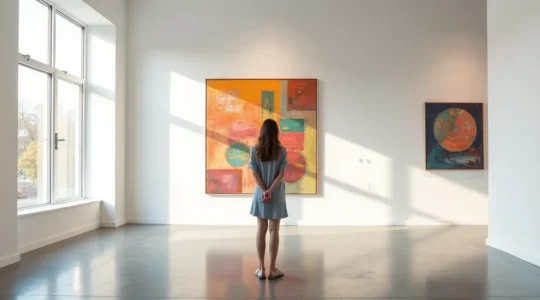
How to Buy Your First Piece of Contemporary Art for Under $1,000
Buying your first artwork for under $1,000 is not about finding a bargain, but making a smart first investment in an artist’s future. Focus on spotting talent at graduate shows, where you can connect with an artist’s career trajectory early…
Read more
How to Develop Cultural Awareness Before Relocating Abroad for Work?
Contrary to popular belief, succeeding as an expat isn’t about memorizing cultural facts; it’s about decoding the invisible “cultural grammar” that governs professional interactions. Culture shock is a predictable phase of cognitive exhaustion, not a personal failure, typically peaking around…
Read more