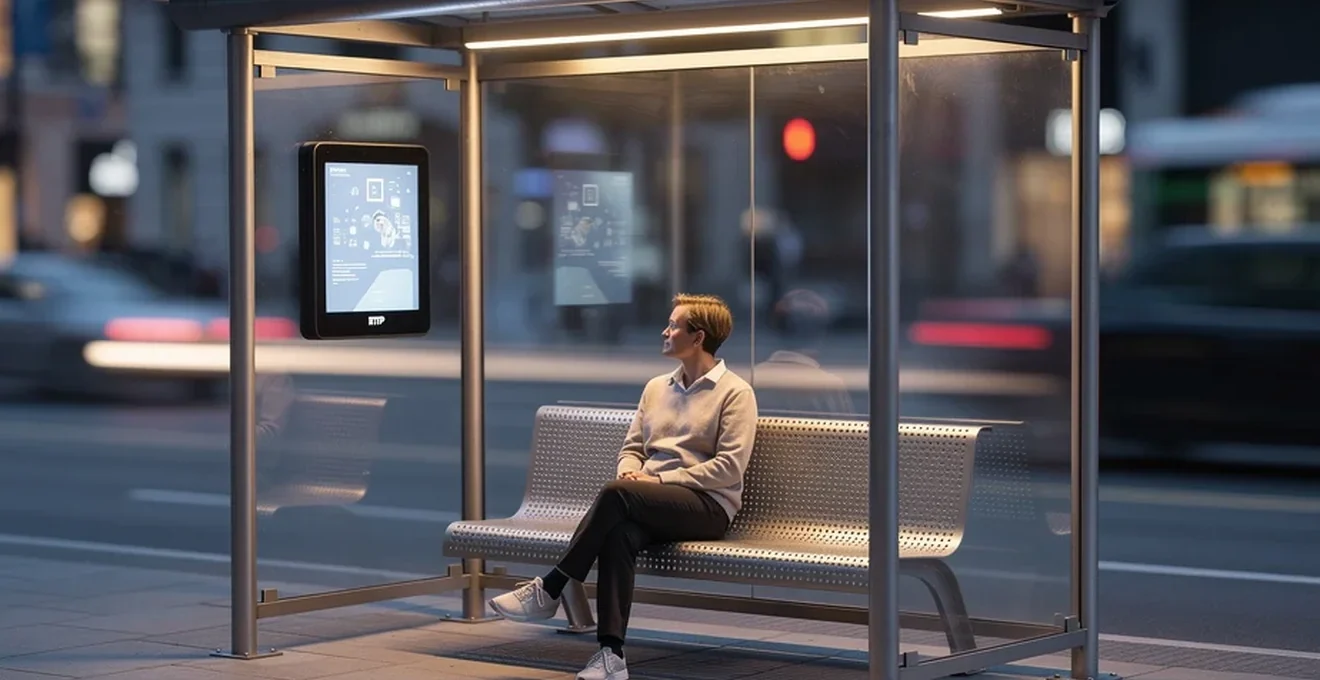
A comfortable bus shelter is one that gets the fundamentals right: sturdy weatherproof construction, seating that people can actually use, reliable lighting after dark, and clear accessible information. Research from Transport Focus and Clear Channel UK, based on feedback from more than 3,000 bus passengers across Great Britain, found that only 15 per cent of passengers considered existing seating comfortable, while 65 per cent of visually impaired and 61 per cent of mobility-impaired users struggled to use shelters at all. Nearly half of passengers said poor lighting affected how safe they felt while waiting. These findings point to a clear conclusion: shelter design is not a cosmetic afterthought but a functional discipline involving materials science, ergonomics, lighting engineering and accessibility law. This article works through each of these areas, from structural materials to smart technology, to explain what genuinely makes a waiting area work for passengers.
Structural materials and weather resistance in bus shelter construction
The materials used in a bus shelter determine how long it lasts, how much it costs to maintain, and how safe passengers feel while using it. Durability guidance consistently favours structural members and inset panels over snap-together curtain walls or decorative sections, which are far easier to vandalise and more expensive to repair. A steel structure is generally considered the best option, with wood proving less durable over time and concrete tending to discolour and soil easily while giving a monolithic appearance.
Tempered glass versus polycarbonate panelling
Side and roof panels need to balance visibility, safety and resistance to damage. Toughened glass of the kind used in some large-city shelter installations resists scratching, is strong, shatter-resistant and easy to clean, making it a reliable choice for high-footfall locations. Plastic or Plexiglas alternatives are generally not recommended, as they discolour and scratch more easily over time, which gradually reduces visibility from inside the shelter and undermines one of its core functions: letting passengers see an approaching bus.
Galvanised steel frames and corrosion prevention
Steel frames are a common feature of well-built shelters, and hot-dip galvanising is widely used to protect against rust and corrosion, particularly in exposed or coastal locations. Many manufacturers also offer powder coating in a wide range of colours on top of the galvanised finish, giving councils and transport authorities the ability to match shelters to local streetscapes without compromising on protection. A protective finish can also be applied where salt damage from road treatments or sea air is a particular concern.
Aluminium composite cladding for coastal installations
In locations exposed to salt air, wind-driven rain or heavy coastal weathering, cladding materials need to resist corrosion while remaining lightweight enough for practical installation and maintenance. Aluminium composite panels are commonly specified in these settings because they combine weather resistance with a finish that stays cleaner for longer than untreated steel or concrete, reducing the frequency of maintenance visits.
Wind load calculations and BS EN 1991-1-4 compliance
Any structure placed at a roadside or in an open public space needs to withstand local wind conditions without becoming unstable or shedding parts. Structural design for UK bus shelters is expected to account for wind loading in line with the relevant British Standard for wind actions, ensuring that frames, fixings and glazing are specified to suit the exposure of each site. This is particularly important for taller or larger shelters, and for those installed in open, unsheltered locations where wind speeds at ground level can be significantly higher than in built-up streets.
Seating ergonomics and passenger comfort standards
Seating is one of the most consistently criticised aspects of existing bus shelters. Passenger research found that just 15 per cent of respondents rated current seating as comfortable, making it one of the clearest priorities for redesign. Seating provision should reflect how heavily a stop is used, and shelters serving busy urban routes need a different approach to seating than those in quiet rural locations.
Cantilever bench design for reduced loitering
Many modern shelters use cantilevered or lean-style seating fixed directly to the shelter frame rather than freestanding benches. This approach reduces the number of moveable parts, which are more prone to damage, and simplifies maintenance because sections can be replaced without dismantling the whole structure. It also tends to discourage prolonged loitering or misuse of the space outside of normal waiting periods, while still giving passengers somewhere to rest while they wait.
Anti-vandal seating materials and perforated steel
Because bus shelters are frequent targets for vandalism, seating materials need to be robust as well as comfortable. Perforated or solid steel seating, finished to resist graffiti and general wear, is a practical choice, since it can be cleaned easily and withstands repeated use without degrading. Materials should be selected so that damaged sections can be reordered and replaced quickly, without requiring the removal of other parts of the shelter to gain access.
Seat height and depth specifications for accessibility
Seat height and depth affect how easily passengers, including older people and those with mobility impairments, can sit down and stand up again. Comfortable, accessible seating is one of the qualities passengers most associate with a well-designed shelter, alongside protection from the weather and a feeling of safety and security. Getting these dimensions right is especially important given that mobility-impaired passengers reported significant difficulty using existing shelters, according to the Transport Focus and Clear Channel research.
Lighting systems and nighttime visibility
Lighting is one of the areas where passengers report the sharpest gap between expectation and reality. Nearly half of those surveyed said that dim or broken lighting severely affected their sense of security, particularly after dark, making it one of the most consistently raised concerns in passenger feedback.
LED illumination and Solar-Powered fixtures
LED fixtures are widely used in shelter lighting because they are energy-efficient and long-lasting compared with older lighting technologies. Solar-powered lighting is increasingly popular as an eco-friendly option, particularly for shelters in locations without easy access to mains power, and it reduces ongoing running costs while still providing reliable illumination for shelters that get dark early or are in poorly lit areas.
Motion-sensor activation for energy efficiency
Motion-sensor lighting allows a shelter to remain energy-efficient while still providing full illumination when passengers are actually present. This approach suits solar-powered installations particularly well, since it reduces demand on stored battery power during quiet periods while ensuring lighting is available exactly when it is needed, rather than running continuously regardless of footfall.
CPTED principles in shelter lighting placement
Good lighting placement is about more than brightness. Passenger research recommends upgrading lighting alongside installing CCTV and help points as a combined approach to improving safety and peace of mind. Lighting should be positioned carefully so that it illuminates the shelter and its approaches clearly without creating glare or reflections in the windscreens of approaching buses, an important consideration for driver safety as well as passenger reassurance.
Weather protection and microclimate control
Protecting passengers from wind, rain and cold is one of the most basic functions of a bus shelter, yet it is frequently done poorly. A shelter that lets in wind and rain can end up being less comfortable than standing in the open, which defeats its purpose entirely.
Roof pitch angles for rainwater drainage
A shelter roof needs to be solid enough to stop rain, sleet or snow from getting through, and its pitch needs to allow water to drain away effectively rather than pooling or running back into the waiting area. This is a straightforward but essential design detail: a roof that fails to shed water properly undermines the shelter’s core weather-protection function regardless of how well the rest of the structure is built.
Windbreak panel positioning in exposed locations
Before a shelter is installed, it is worth understanding the prevailing wind direction at that location so the structure does not end up funnelling wind through rather than blocking it. Shelters with full side panels offer far better wind protection than open-fronted designs, and careful positioning, combined with entry and exit points set away from the prevailing wind, prevents a shelter from becoming what is effectively a wind tunnel.
Heated shelter prototypes in scandinavian transit systems
In colder climates, some transit authorities have trialled heated waiting areas as a way of improving passenger comfort during winter months. While not yet standard in the UK, such approaches illustrate the broader principle behind good shelter design: protection from the elements should go beyond simply keeping rain out, extending to genuine thermal comfort where conditions and budgets allow.
Accessibility compliance under the equality act 2010
Accessibility is not an optional add-on to bus shelter design; it is a legal and practical necessity. As Amanda Mitchell of the disability equality charity Scope put it in response to the Transport Focus and Clear Channel research:
“Far too often disabled people are an afterthought when services and facilities are introduced. When disabled people are not even able to read the timetable or have suitable seating at the bus stop, they can often feel like a second class citizen.”
Shelters designed and built in Great Britain need to reflect the requirements of the Equality Act 2010, which places duties on service providers, including transport authorities, to make reasonable adjustments so that disabled people are not put at a substantial disadvantage.
Tactile paving integration at shelter boundaries
Clear, consistent tactile paving at the boundaries of a shelter and along the route to the boarding point helps passengers with visual impairments navigate the space safely and independently. This is particularly important given that 65 per cent of visually impaired passengers reported difficulty using shelters in their current form, underlining how much scope there is for improvement in this area.
Wheelchair turning circles and DDA-Compliant clearances
Adequate space within and around a shelter is essential for wheelchair users and passengers with prams, who need room to manoeuvre without obstruction. Open-fronted shelter designs can offer more usable space, though at the cost of reduced weather protection, which is why bespoke or custom-designed shelters are often used to balance sufficient clearance with adequate shelter from the elements on constrained sites.
Audio-visual departure displays for sensory impairments
Passengers with sensory impairments benefit significantly from information that is presented in more than one format. Rachel Wilkinson of the Thomas Pocklington Trust, an organisation supporting blind and partially sighted people, noted that around one in three blind or partially sighted people rarely or never use public transport, a statistic that highlights just how much impact accessible information design can have. Audio announcements paired with clear visual displays help ensure that departure information is genuinely usable by passengers with a range of sensory impairments, rather than relying on printed timetables or screens alone.
Smart technology integration in modern shelter design
Technology is increasingly central to how passengers experience a bus shelter, particularly around real-time information, which passenger research identified as one of the most requested improvements alongside better seating and weather protection.
Real-time passenger information systems and RTPI screens
Accurate, real-time information about bus arrivals was one of the changes passengers most wanted to see, according to the Transport Focus and Clear Channel research. Digital displays showing live departure information reduce uncertainty during waiting periods and are particularly valuable for passengers unfamiliar with a route, including tourists and occasional users, as well as for regular passengers trying to plan their journey with confidence.
USB charging ports and Wi-Fi connectivity
Connectivity features such as charging points and Wi-Fi access are becoming more common in newer shelter designs, reflecting passengers’ broader expectations of public spaces. While not yet a universal standard, these additions can make waiting periods more productive and are increasingly seen as part of a modern, passenger-focused approach to shelter design.
Air quality sensors in urban transit hubs like transport for london shelters
In busy urban transit hubs, some shelters now incorporate environmental sensors to monitor local air quality, reflecting a wider push towards using street furniture as a source of useful public data. This kind of integration fits within the broader industry conversation, prompted by the Transport Focus and Clear Channel report, about establishing a national standard for bus shelters that ensures sufficient protection, accessibility, comfort, safety and information for all users. As Neil Chapman, Product Design Director at Clear Channel Europe and UK, explained:
“Legacy design bus shelters continue to be the norm across the UK. This research reinforces what we’ve long believed – that bus shelters need to be reimagined, with the passenger experience as the focal point.”
Bringing structural resilience, ergonomic seating, effective lighting, robust weather protection, legal accessibility compliance and thoughtful technology together is what separates a genuinely comfortable bus shelter from a legacy design that merely provides a roof. As co-design initiatives between transport authorities, passengers and disability charities continue to develop, this combination of factors is likely to become the baseline expectation rather than the exception.