
Buying from female artisans is more than a transaction; it’s a direct investment in community-wide prosperity and human dignity.
- Women reinvest up to 90% of their income into their families, creating a powerful multiplier effect on health and education.
- True support requires looking beyond labels to value transparency, partnership, and cultural respect in the supply chain.
Recommendation: Shift from being a passive consumer to an active partner by verifying authenticity and demanding a fair value chain for the products you buy.
As conscious consumers, we often stand at a crossroads, holding a beautiful, handcrafted object and wondering if our purchase truly makes a difference. We are told that buying handmade goods supports communities, a simple act of commerce that feels good. But this narrative often stops there, leaving the deeper mechanics of empowerment hidden. We see a vibrant tapestry or a skillfully carved bowl, but we don’t see the economic system it represents. Is our money a token gesture, or is it a tool for genuine, lasting change?
The truth is, many common approaches, from simple donations to blindly trusting a label, fall short of creating real economic agency. They can sometimes perpetuate cycles of dependency or fail to address the vast inequities in the global value chain. The conversation needs to evolve. What if the key to equitable commerce isn’t just about *what* we buy, but *how* we think about the purchase itself? What if we could transform our role from that of a passive buyer into an active, informed partner in an artisan’s success?
This article is built on that very premise. We will explore the powerful economic principles that turn a simple purchase into a catalyst for change. We will move beyond the surface-level platitudes to understand the structural impact of our choices. Together, we’ll uncover how to verify true craftsmanship, why a purchase builds more dignity than a donation, and how we can ensure that the profit and respect flow directly to the woman whose hands created the beauty we admire. It’s time to build a more just and beautiful world, one thoughtful purchase at a time.
To guide you through this new way of thinking, this article is structured to build your understanding step-by-step, from the fundamental ‘why’ to the practical ‘how’ of becoming an advocate for equitable trade.
Summary: Supporting Female Artisans and Fostering Equitable Commerce
- Why Do Women Reinvest 90% of Their Income Into Their Families?
- How to Distinguish Real Handicraft From Mass-Produced “Ethnic” Decor?
- Donation vs. Purchase: Which Builds More Dignity for Artisans?
- The “Handmade” Markup: ensuring the Creator Gets the Profit
- How Pre-Ordering Artisan Goods Helps Communities Survive Lean Seasons?
- The Handshake Error That Can Kill a Deal in Specific Cultures
- Why Does the Farmer Only See $0.10 of Your $5 Latte?
- Is Paying Extra for Fair Trade Coffee Actually Helping Farmers?
Why Do Women Reinvest 90% of Their Income Into Their Families?
The most compelling reason to intentionally support female artisans is not charity; it is sound economic strategy. It’s a phenomenon known as the “multiplier effect,” and it represents one of the most powerful levers for community development. When a woman gains economic agency, the impact of her earnings radiates outward, creating waves of positive change. The data on this is unequivocal. As the World Bank and Council on Foreign Relations have highlighted, when women are able to earn an income, they reinvest the vast majority of it back into their families and communities.
This isn’t just an anecdotal observation; it’s a well-documented economic pattern. Groundbreaking research from Harvard’s Center for International Development shows that women reinvest up to 90% of their earnings in their families, compared to only 30-40% among men. This reinvestment is not random. It is strategically allocated to the pillars of long-term prosperity: children’s nutrition, healthcare, and education. By earning a stable income, a female artisan is not just supporting herself; she is ensuring the next generation is healthier, better educated, and has a greater chance of breaking the cycle of poverty.
Case Study: Cambodia’s Women Entrepreneurs and the Multiplier Effect
In Cambodia, the CAPRED program supported Kong Neam, an entrepreneur who transformed her small backyard into a productive farm. By becoming a supplier to a woman-led agro-processing company, Neam’s increased income didn’t just stay with her. It is now directly funding her children’s education and has elevated her role in family decision-making. This real-world example demonstrates how empowering one woman financially creates a ripple effect, strengthening family stability and future community leadership.
Supporting a woman-led enterprise is, therefore, a direct investment in public health, education, and social stability. It’s a strategic choice to fuel the economic engine that has the greatest return for the entire community.
How to Distinguish Real Handicraft From Mass-Produced “Ethnic” Decor?
In a globalized market flooded with mass-produced items masquerading as authentic, the ability to identify genuine handicrafts is a crucial skill for any conscious consumer. The term “ethnic” is often co-opted by large factories to give a veneer of cultural origin to generic decor. However, true artisan-made goods carry the signature of a human touch—a story of skill, tradition, and individuality. The key is to shift your focus from a product’s superficial appearance to its deeper context and creation process. An authentic piece is not just an object; it is a testament to a person, a process, and a place.
Learning to spot these signs of authenticity empowers you to direct your money where it will have a real impact. It means looking for the subtle “imperfections” that are not flaws but rather hallmarks of human creation—slight variations in color, a stitch that is uniquely placed, or an asymmetry that a machine could never replicate. These are the fingerprints of the artisan. The goal is to move beyond passive consumption and become an active investigator of a product’s origin story. This ensures your purchase supports a real person and their heritage, not a faceless production line.

This close-up view reveals the soul of true craftsmanship. Notice the individual threads and the organic texture; these are the details that mass production erases. By learning to see and value this level of detail, you can confidently distinguish a piece with a story from one that is merely a hollow imitation. This diligence is the first step in building a truly equitable relationship with creators.
Your Checklist for Authenticating Artisan Goods
- Person: Look for a real, named artisan. Can the seller provide a name, a photo, or a verifiable story about the creator and their background?
- Process: Investigate the creation method. Is the process documented? Are the techniques and materials used authentic to the craft’s region of origin?
- Price: Assess the cost realistically. Does the price fairly reflect the time, skill, and materials involved, or is it too cheap to be ethically plausible?
- Provenance: Seek transparency about the origin. Where exactly was it made? Can you trace its journey from the artisan’s community to your hands?
- Imperfection: Value the unique characteristics. Cherish slight variations in color, weave, or shape as the signature of human craftsmanship, not as defects.
Donation vs. Purchase: Which Builds More Dignity for Artisans?
The impulse to help is a noble one, and for decades, charitable donations have been the primary model for supporting communities in developing nations. While aid has its place in crises, when it comes to long-term empowerment, we must critically examine the dynamic it creates. A donation, by its nature, establishes a relationship of giver and receiver. It can inadvertently create a power imbalance and foster dependency, positioning one party as having a need and the other as fulfilling it. But what if there’s a more dignified and sustainable path?
This is where the power of a fair trade purchase comes in. A purchase is not an act of charity; it is an act of validation. It is a market-based acknowledgment that an artisan’s skill, time, and cultural heritage have tangible economic value. The World Fair Trade Organization frames this perfectly: a purchase validates an artisan’s skill as a valuable contribution to the global economy. It transforms the artisan from a recipient of aid into a business owner, an entrepreneur, and a respected participant in international commerce. This shift in status is fundamental to building what we can call “dignity economics,” where economic activity reinforces self-reliance and professional identity.
The following table, based on principles from organizations like those promoting artisan empowerment, starkly illustrates the difference in long-term impact between the two models.
| Aspect | Donation Model | Fair Trade Purchase Model |
|---|---|---|
| Economic Impact | One-time financial relief | Sustainable income stream |
| Skill Recognition | Limited validation | Professional identity reinforcement |
| Community Standing | Recipient status | Business owner/entrepreneur status |
| Long-term Sustainability | Dependency risk | Self-reliance and growth potential |
| Market Connection | None | Direct link to global markets |
Choosing to purchase, therefore, is choosing to partner. It is an investment in a sustainable business, not a temporary fix for a symptom of poverty. It’s a conscious decision to foster independence and respect, which are the true cornerstones of lasting empowerment.
The “Handmade” Markup: ensuring the Creator Gets the Profit
One of the most critical and often invisible aspects of equitable commerce is the structure of the value chain. When you buy a product, where does your money actually go? The sticker price—or the “handmade markup”—can be misleading. In many conventional supply chains, a shockingly small fraction of the final retail price ever makes it back to the original producer. This is not just a problem for artisans; it’s a systemic issue across many global commodities.
To understand this disparity, consider a familiar product. In the coffee industry, for example, it’s widely documented that producers often see a tiny portion of the final price. In fact, it is not uncommon for coffee farmers who receive only 7-10% of the supermarket price for their beans. The vast majority of the cost is absorbed by a long chain of middlemen: processors, exporters, importers, roasters, distributors, and retailers. Artisans often face a similar challenge, where their intricate work is devalued by a system that prioritizes profits for intermediaries over fair compensation for the creator.
This is why transparency is non-negotiable. True fair trade isn’t just about paying a slightly higher price; it’s about restructuring the system to ensure a just distribution of profits. When this is done correctly, the results are transformative.
Case Study: The Power of the Fair Trade Premium
Since 2015, Fair Trade cooperatives have successfully channeled funds back to communities through a transparent mechanism. They have received a total of 483 million euros in Fair Trade Premium payments. Critically, these funds are democratically managed by the cooperatives themselves. A significant portion—58%—has been invested in community development and initiatives to fight hunger. This demonstrates that when pricing systems are transparent and empower producers, the “markup” is transformed from a source of exploitation into an engine for ecosystem-wide investment, benefiting entire communities far beyond individual artisans.
As a consumer partner, your role is to seek out and support brands that are transparent about their pricing structure and can demonstrate how they ensure a fair share of the profit reaches the creator.
How Pre-Ordering Artisan Goods Helps Communities Survive Lean Seasons?
The traditional retail model is built on risk—specifically, the risk borne by the producer. Artisans must often invest in expensive raw materials and spend weeks or months creating products with no guarantee of a sale. If inventory doesn’t sell, they absorb the entire loss. This financial precarity is especially acute during “lean seasons,” the periods between harvests or tourist seasons when income streams dry up. This is where a more collaborative model of commerce, like pre-ordering, can be a game-changer.
Pre-ordering fundamentally shifts the economic equation. By paying for a product in advance, the consumer becomes a direct financial partner in the creation process. This simple act provides a cascade of benefits for artisan communities. It injects vital working capital at the beginning of the production cycle, allowing artisans to purchase materials without resorting to predatory loans. It also guarantees that every item produced has a committed buyer, completely eliminating the risk of unsold inventory and the waste of precious materials and labor. This creates a zero-waste, demand-driven system that is both economically and environmentally sustainable.
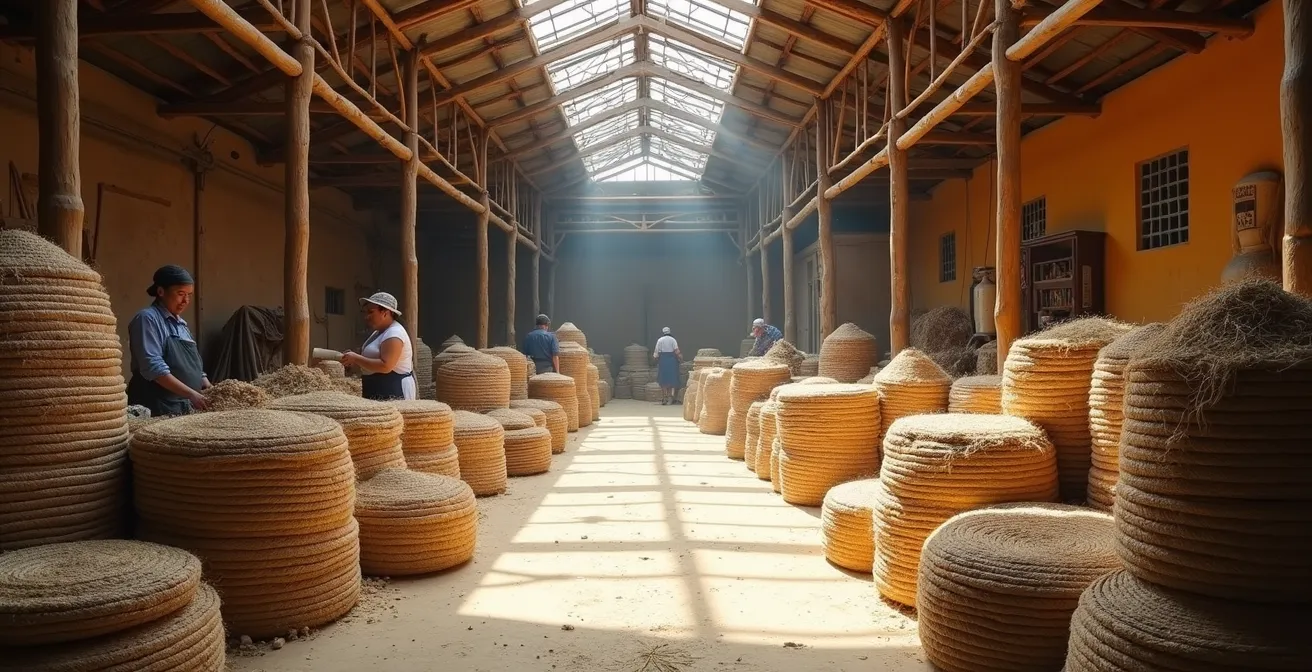
This system fosters a powerful, risk-sharing partnership. It moves the relationship beyond a one-time transaction to one of mutual investment and co-creation. The benefits are profound:
- Financial Stability: Provides a predictable income stream that helps families plan and weather lean seasons.
- Zero-Waste Production: Ensures resources are used only for guaranteed sales, respecting both labor and the environment.
- Elimination of Debt: Frees artisans from the need for high-interest loans to finance raw materials.
- Co-creation Opportunities: Allows for direct communication between consumer and creator, opening the door for personalized and custom-made goods.
By participating in a pre-order system, you are not just buying a product; you are underwriting an artisan’s business, providing the stability they need to thrive year-round.
The Handshake Error That Can Kill a Deal in Specific Cultures
Building equitable commerce is not just about financial transactions; it’s about building human relationships. As we seek to become better partners to artisans around the globe, we must recognize that this partnership is built on a foundation of mutual respect, and a huge part of that respect is cultural understanding. In the West, business is often transactional and driven by speed and efficiency. In many other cultures, business is relational, built slowly on a bedrock of trust, personal connection, and shared understanding. Ignoring these differences is not just impolite—it can be fatal to a partnership.
The consequences of cultural ignorance in global business are staggering. In fact, studies reveal that up to 70% of international ventures fail due to cultural misunderstandings. A gesture as simple as a handshake, the use of a first name, or the pace of negotiations can carry profound meaning. What is seen as efficiency in one culture may be interpreted as aggression or disrespect in another. A “deal” with an artisan community isn’t a one-time contract; it’s an ongoing relationship. Rushing this process or imposing foreign business norms can destroy trust before it even has a chance to form.
Case Study: Starbucks’ Success Through Local Adaptation
Starbucks’ expansion into new markets offers a powerful lesson in the value of cultural adaptation. After initial struggles, the company experienced significant growth by forming deep partnerships with local retailers and adapting to local business customs. In Indonesia, for example, their collaboration with smallholder farmers involved respecting the local pace of business and prioritizing relationship-building over rigid Western deadlines. This symbiotic approach not only reduced costs but also forged fiercely loyal supplier communities, demonstrating that a relationship-first strategy creates far more sustainable and resilient partnerships than a purely transactional one.
As consumers and advocates, our responsibility is to support brands that demonstrate this deep cultural fluency. We must champion organizations that invest time in understanding their artisan partners, respecting their social customs, and co-creating business practices that honor, rather than erase, cultural differences.
Why Does the Farmer Only See $0.10 of Your $5 Latte?
The question is iconic for a reason. It perfectly encapsulates the profound disconnect in our global economy between the value of a final product and the compensation received by its original creator. This isn’t just about coffee; it’s a structural problem that affects artisans, farmers, and producers of all kinds. To become a true partner in equitable commerce, we must look “under the hood” of the supply chain and understand precisely where our money is going. The journey from a raw material in a small village to a finished product on a store shelf is often long and convoluted, with value being added—and profit being extracted—at every single step.
In a typical, non-transparent supply chain, the producer or artisan is at the very beginning of a long line of intermediaries. Each one—the local collector, the processor, the exporter, the importer, the distributor, and finally, the retailer—takes a cut. While each may provide a service, the system is often balanced heavily in favor of the entities closest to the final consumer, leaving the creator with a tiny fraction of the product’s ultimate worth. This systemic inequity is the core problem that fair and direct trade models seek to solve.
The table below breaks down a generalized value distribution for both a mass-market commodity like coffee and a typical artisan handicraft, illustrating how the value is dispersed along the chain. While figures vary, the overall pattern is remarkably consistent.
| Supply Chain Stage | Coffee ($5 Latte) | Artisan Handicraft ($50) |
|---|---|---|
| Producer/Artisan | 7-10% ($0.35-0.50) | 10-15% ($5-7.50) |
| Local Collector/Cooperative | 5-8% | 8-10% |
| Exporter/Processor | 10-15% | 12-15% |
| Importer/Distributor | 15-20% | 15-18% |
| Retailer/Brand | 50-60% | 45-55% |
By understanding this breakdown, we can see why simply paying more isn’t enough. The solution requires shortening the supply chain, fostering direct trade relationships, and championing brands that are transparent about their cost structure. Only then can we begin to correct this imbalance and ensure the artisan receives a share that truly reflects their skill and labor.
Key Takeaways
- Invest in Women: Empowering female artisans is a strategic investment in community health, education, and stability due to the 90% reinvestment rate.
- Value Authenticity: Learn to distinguish true craftsmanship by looking for the story, process, and unique “imperfections” behind a product.
- Purchase with Purpose: A fair trade purchase builds more long-term dignity and economic agency for an artisan than a one-time donation.
Is Paying Extra for Fair Trade Coffee Actually Helping Farmers?
For years, the simple advice to conscious consumers has been to “look for the label.” Certifications like Fair Trade have done invaluable work in raising consumer awareness and establishing standards for more ethical production. Consumers have responded positively, showing they are often willing to pay a premium for products they believe are sourced responsibly. However, as our understanding of equitable commerce matures, we must also recognize the limitations of a label-only approach. Is the presence of a certification the only mark of an ethical product? And is its absence always a red flag?
The reality on the ground is more complex. As experts from organizations like the Global Coffee Platform point out, Fair Trade and other certifications can be prohibitively expensive or bureaucratic for the smallest, most marginalized artisan groups to obtain. These are often the very producers who need the most support. The absence of a label, therefore, does not automatically mean the absence of ethical practices. Many small-scale enterprises and direct-trade relationships embody the principles of fair trade—fair payment, long-term partnership, and community investment—without ever going through the formal certification process. Relying solely on a label can cause us to overlook these deeply impactful small businesses.
This means our role as consumer partners must become more sophisticated. Instead of just looking for a logo, we need to look for a set of principles in action. We must become investigators of a brand’s practices, seeking evidence of a genuine commitment to equitable partnership. The following principles are what truly define an ethical relationship, whether it is certified or not:
- Transparency: Openly sharing information about the supply chain, pricing, and the artisans themselves.
- Long-Term Partnerships: Demonstrating a commitment to producers that lasts longer than a single season (e.g., 3+ years).
- Fair Payment Terms: Offering advance payments or using pre-order models to share financial risk.
- Capacity Building: Investing in training, equipment, or infrastructure that helps the artisan community grow.
- Direct Trade: Actively working to reduce the number of middlemen between the creator and the consumer.
- Community Development: Supporting initiatives that benefit the entire community, not just individual producers.
By seeking out brands that live these values, we move beyond the checklist of certification and into the spirit of true partnership. We learn to recognize ethical practices by their substance, not just their symbol.
The journey from a passive buyer to an active partner in equitable commerce is a shift in mindset. It requires curiosity, diligence, and a commitment to looking beyond the surface. Your next purchase of a handmade good can be more than an acquisition; it can be a statement of solidarity, a vote for a more just economy, and a direct investment in a woman’s power to uplift her family and community. Start today by applying these principles and asking the deeper questions about the beautiful objects you bring into your life.